




QA managers and test leads
Kicking off a new GPS system testing phase, ensuring all dependencies and risks are documented before execution.
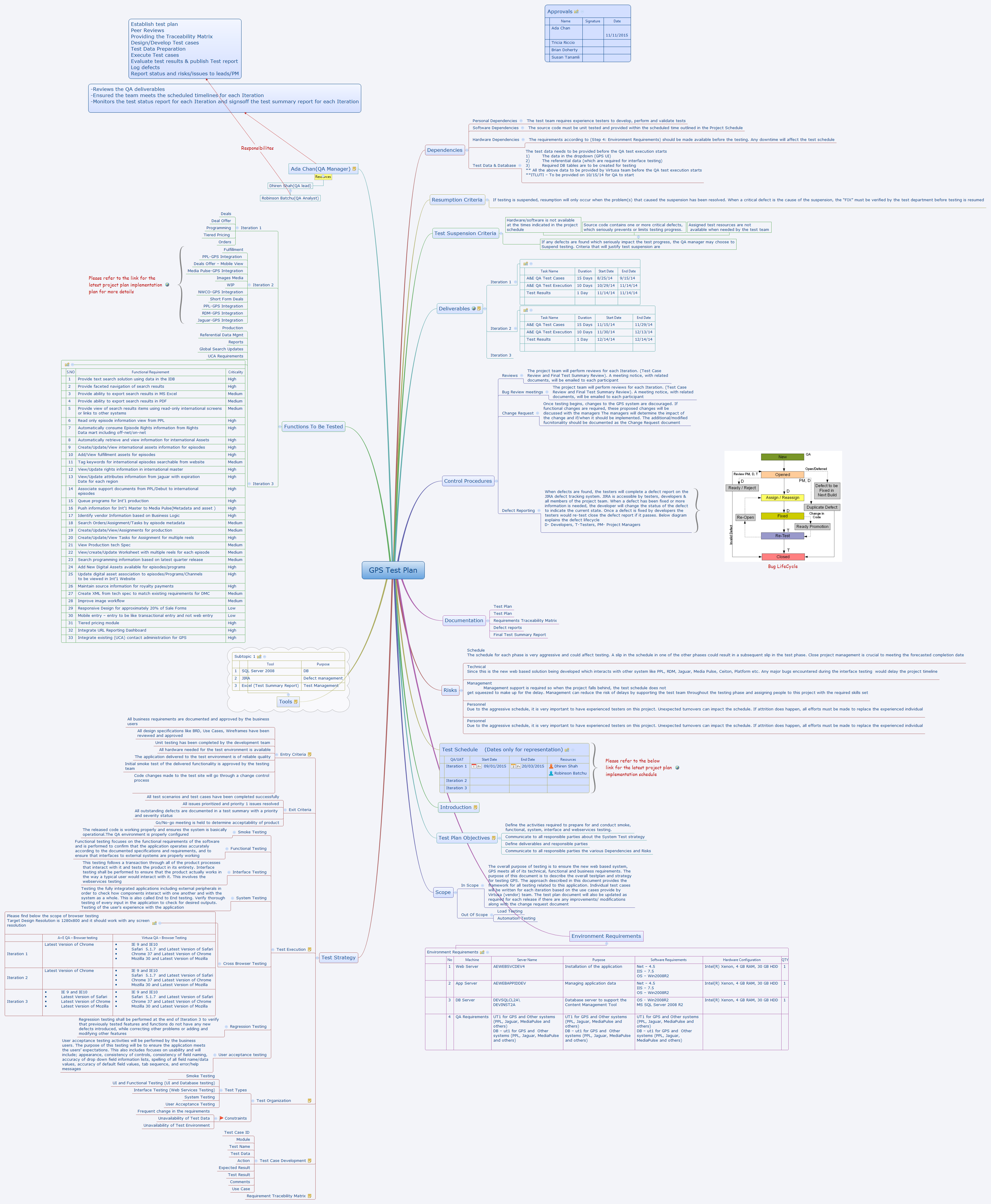
The GPS Test Plan mind map template provides a comprehensive framework for QA teams to plan, execute, and manage testing for GPS-based systems. With 380 nodes across 15 major branches, it covers dependencies, resumption criteria, test suspension criteria, deliverables, control procedures, documentation, risks, test schedule, introduction, test plan objectives, scope, environment requirements, test strategy, tools, and functions to be tested. Key nodes include 'Dependencies' (personal, software, hardware, test data), 'Control Procedures' (reviews, bug review meetings, change request, defect reporting), and 'Risks' (schedule, technical, management, personnel). This GPS Test Plan template serves as a structured cheat sheet for test managers and QA engineers to ensure thorough test coverage and risk mitigation.
Conditions d'utilisationKicking off a new GPS system testing phase, ensuring all dependencies and risks are documented before execution.
Preparing for a test readiness review, where control procedures and deliverables need to be communicated to stakeholders.
During test execution, when a critical defect triggers suspension criteria, requiring a structured resumption plan.
Open the .xmind file in Xmind (desktop or web version).
Review the 'Introduction' and 'Test Plan Objectives' branches to understand the template's scope.
Customize each branch: update 'Dependencies' with your project's specific personal, software, hardware, and test data requirements.
Fill in 'Test Schedule' with actual dates, and adjust 'Risks' to reflect your project's risk profile.
Save and share the template with your team for collaborative review and execution.
The template covers 15 major sections including dependencies, resumption criteria, test suspension criteria, deliverables, control procedures, documentation, risks, test schedule, introduction, objectives, scope, environment requirements, test strategy, tools, and functions to be tested.
Open the .xmind file in Xmind, then customize each branch with your project-specific details: update dependencies, define test suspension criteria, list deliverables, and adjust the risk register to match your timeline and resources.
Yes, the template is fully editable in Xmind desktop or web. You can modify any node, add subtopics, and export as PDF or image for printing or sharing.
It outlines processes for reviews, bug review meetings, change requests, and defect reporting via JIRA, including the bug lifecycle, to maintain quality and traceability throughout testing.
Absolutely. The 'Risks' branch includes schedule, technical, management, and personnel risks. You can add new risk categories or modify existing ones to fit your project's context.
Partagez vos modèles de cartes mentales avec des créateurs du monde entier et commencez à gagner avec votre travail.

