




Writers and screenwriters
Developing a character's emotional arc in a novel or screenplay
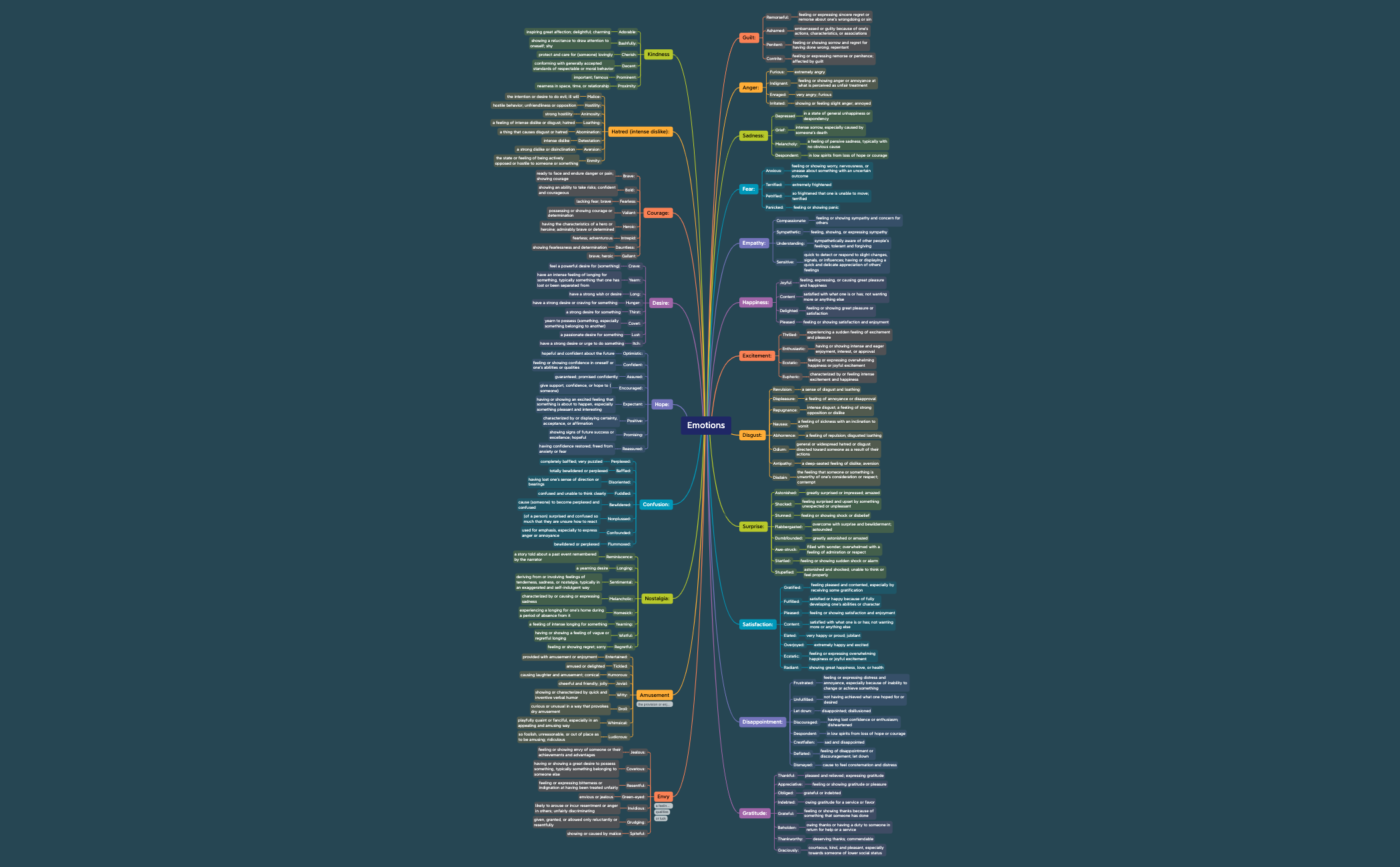
The Emotions mind map template from Xmind provides a structured taxonomy of 296 emotional concepts, organized into 22 primary categories such as Guilt, Anger, Sadness, Fear, Empathy, Happiness, Excitement, Disgust, Surprise, Satisfaction, Disappointment, Gratitude, Envy, Amusement, Nostalgia, Confusion, Hope, Desire, Courage, Hatred, and Kindness. Each category includes nuanced synonyms and definitions—for example, 'Guilt' branches into 'Remorseful', 'Ashamed', 'Penitent', and 'Contrite', while 'Anger' covers 'Furious', 'Indignant', 'Enraged', and 'Irritated'. This template serves as a comprehensive emotional vocabulary builder and reference tool, ideal for writers, therapists, educators, or anyone seeking to articulate feelings with precision. The mind map layout visually groups related emotions, making it easy to explore subtle differences between terms like 'Melancholy' and 'Despondent' under Sadness, or 'Revulsion' and 'Abhorrence' under Disgust. By mapping over 200 emotional states, this Emotions cheat sheet helps users deepen their emotional intelligence and communication skills.
Términos y condicionesDeveloping a character's emotional arc in a novel or screenplay
Teaching a psychology or emotional literacy class
Improving self-awareness and emotional vocabulary for personal growth
Open the template in Xmind to browse the 22 primary categories and expand branches to view detailed synonyms and definitions.
Edit node text to add personal notes or use the search function to quickly locate specific emotional concepts like 'Petrified' or 'Ecstatic'.
Save your customized emotional vocabulary as an image, PDF, or outline to share with others or use as a printed reference tool.
The template contains 22 primary emotion categories with over 290 nodes, each providing synonyms and definitions for nuanced emotional states like 'Remorseful', 'Furious', 'Melancholy', and 'Ecstatic'.
Writers can use the template to find precise emotional descriptors for characters. For example, instead of 'angry', choose 'indignant' or 'enraged' based on the definition provided.
Yes, you can open the .xmind file in Xmind and customize any node—add your own emotions, edit definitions, or reorganize branches to fit your needs.
Start by exploring each primary category (e.g., 'Happiness', 'Fear') and review the sub-emotions. Use the definitions to understand subtle differences, then test yourself by covering the definitions.
Absolutely. By expanding your emotional vocabulary, you can better identify and articulate your own feelings and empathize with others, which is a core component of emotional intelligence.
Comparte tus plantillas de mapas mentales con creadores de todo el mundo y empieza a ganar con tu trabajo.

