




Psychology students and test-takers
Preparing for a psychology exam on memory and sleep
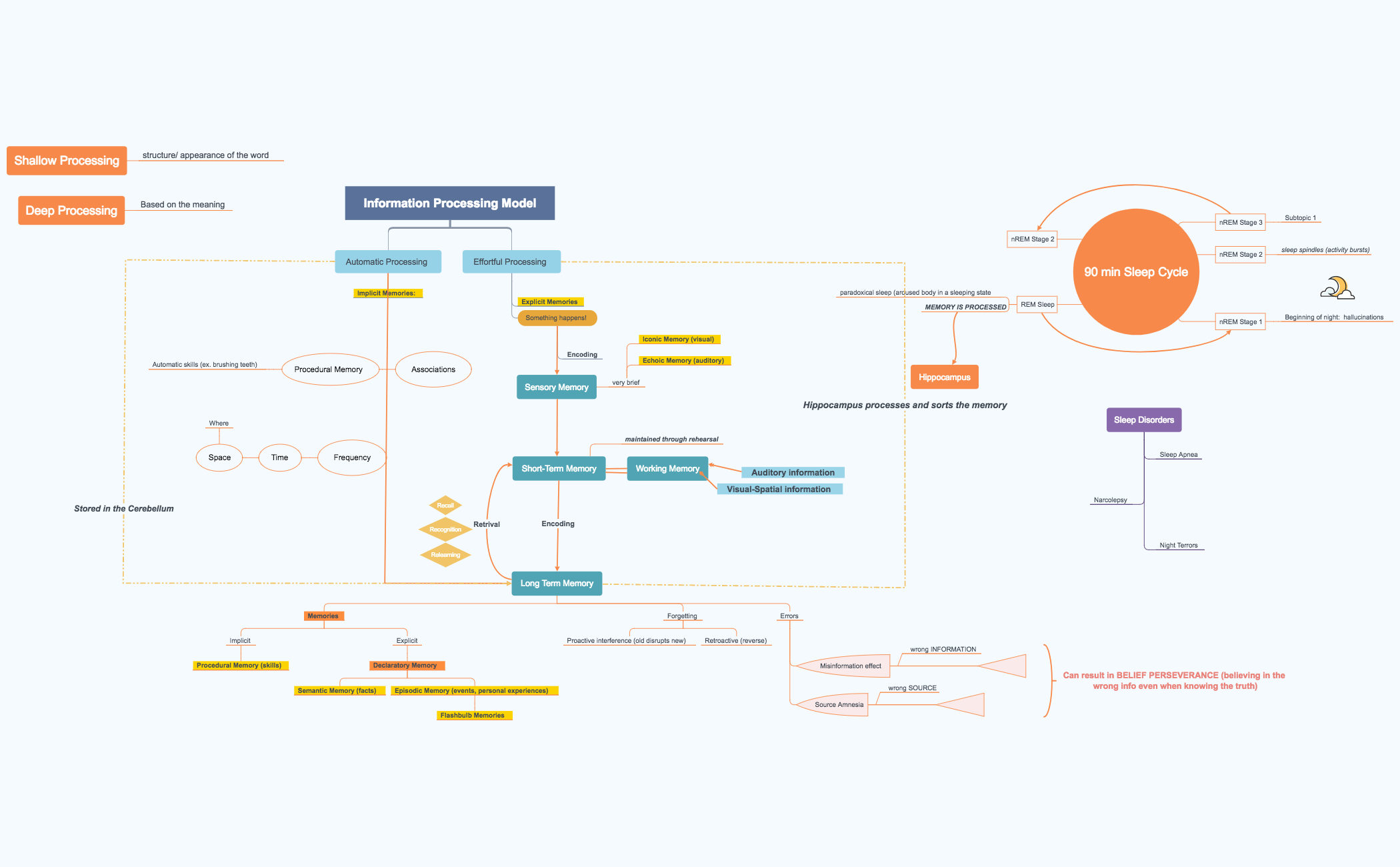
The Cognition and Sleep mind map template, built around the 'Information Processing Model', covers 64 nodes across memory types, sleep cycles, and cognitive errors. It includes verbatim concepts like 'Proactive interference (old disrupts new)', 'Misinformation effect', and '90 min Sleep Cycle'. Designed for psychology students and educators, this template serves as a comprehensive cheat sheet for understanding how memory is encoded, stored, and retrieved, and how sleep stages like REM and nREM impact consolidation. The map is organized into branches such as Automatic Processing, Effortful Processing, and Long Term Memory, with detailed sub-nodes on forgetting, errors, and sleep disorders like Sleep Apnea and Narcolepsy. This cognition and sleep mind map is ideal for exam prep or classroom review, offering a structured overview of key psychological theories and research findings.
Termos e condiçõesPreparing for a psychology exam on memory and sleep
Designing a lecture on the Information Processing Model
Reviewing sleep disorders and their impact on cognition
Launch the template in Xmind to navigate the Information Processing Model, memory types, and sleep cycle branches.
Click on specific nodes like Sleep Disorders or Long Term Memory to customize definitions and add your own study notes.
Adjust the visual structure by dragging branches and export your final mind map as a PDF or image for exam preparation.
It covers the Information Processing Model, memory types (implicit/explicit), forgetting (proactive and retroactive interference), errors (misinformation effect, source amnesia), sleep cycles (90 min, nREM stages, REM), and sleep disorders (apnea, narcolepsy, night terrors).
Open the .xmind file in Xmind, then explore branches like 'Long Term Memory' and '90 min Sleep Cycle'. Customize nodes by adding your own examples or definitions. Use it as a visual study guide for psychology exams.
Yes, the template is fully editable in Xmind (desktop, web, or mobile). You can add, delete, or rearrange nodes. Export as PDF or image for printing or sharing.
It explains how wrong information can distort memory, leading to belief perseverance. This node is part of the 'Errors' branch under 'Long Term Memory' and is useful for discussing eyewitness testimony reliability.
Absolutely. The '90 min Sleep Cycle' branch includes stages like nREM Stage 2 with 'sleep spindles'. You can add durations, symptoms, or personal sleep data by editing the node text.
Use it during psychology exam prep, when studying memory models, or for reviewing sleep stages and disorders. It's also helpful for creating lesson plans or as a quick reference for cognitive psychology concepts.
Compartilhe seus modelos de mapas mentais com criadores ao redor do mundo e comece a ganhar com seu trabalho.

