




Veterinary students
Reviewing drug classifications before a veterinary pharmacology exam
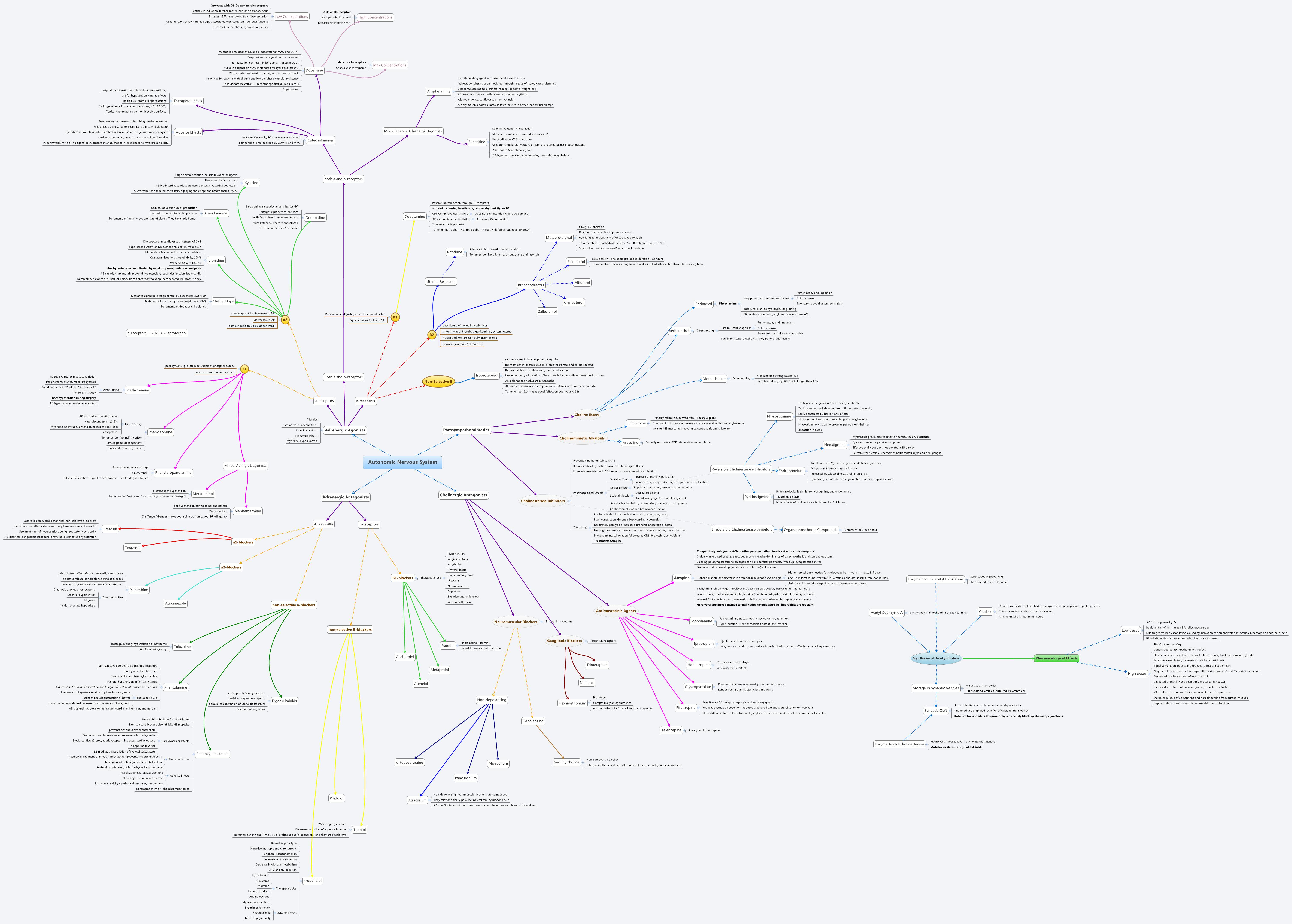
The Autonomic Nervous System mind map template, created for SGUSVM Pharm I Dr. Kumar's ANS Drug List, organizes 441 nodes covering adrenergic and cholinergic pharmacology. It systematically categorizes Adrenergic Agonists, Adrenergic Antagonists, Parasympathomimetics, and Cholinergic Antagonists, with detailed sub-branches on receptor subtypes (a1, a2, B1, B2) and specific drugs like Clonidine, Isoproterenol, and Atropine. Each drug entry includes therapeutic uses, adverse effects, and memory aids, making it a comprehensive study resource for veterinary pharmacology. The template's structure allows quick navigation from receptor mechanisms to clinical applications, ideal for exam preparation.
Terms and ConditionsReviewing drug classifications before a veterinary pharmacology exam
Preparing lecture notes on autonomic nervous system drugs
Quickly referencing adverse effects of adrenergic agonists during clinical rounds
Download the .xmind file and open it to navigate the primary branches covering Adrenergic and Cholinergic pharmacology.
Expand specific drug nodes like Clonidine or Atropine to study their receptor subtypes, therapeutic uses, and adverse effects.
Personalize the map with your own notes before exporting it as a PDF or image for your pharmacology exam preparation.
The template covers 441 nodes across adrenergic agonists, antagonists, cholinergic agents, and receptor subtypes. It includes drug names, mechanisms, therapeutic uses, adverse effects, and memory aids for veterinary pharmacology.
Open the .xmind file in Xmind, then navigate branches like Adrenergic Agonists or Cholinergic Antagonists. Use the hierarchical structure to review drug classes, receptor affinities, and clinical applications. Customize by adding notes or highlighting key drugs.
Yes, the .xmind file is fully editable in Xmind (desktop or web). You can add, remove, or reorganize nodes. Export as PDF or image for printing.
The a2 branch covers pre-synaptic receptors that inhibit norepinephrine release. Drugs like Clonidine and Xylazine are detailed, with uses in hypertension, sedation, and analgesia in large animals.
Absolutely. Each drug node (e.g., Methoxamine, Atropine) can be edited to update dosages, side effects, or mnemonics. You can also add new branches for additional drugs.
Use it during pharmacology study sessions, before exams, or when preparing lecture notes. It's especially helpful for veterinary students memorizing drug lists and mechanisms.
Share your mind map templates with creators around the world and start earning from your work.

