

'%3e%3cpath%20d='M9.59961%204H22.3996'%20stroke='%23FF9334'%20stroke-width='1.92'%20stroke-linecap='round'/%3e%3cpath%20d='M12.0001%204V12.8L7.20006%2025.6C6.72006%2026.928%207.68006%2028%209.12006%2028H22.8801C24.3201%2028%2025.2801%2026.928%2024.8001%2025.6L20.0001%2012.8V4'%20stroke='%23FF9334'%20stroke-width='1.92'%20stroke-linecap='round'%20stroke-linejoin='round'/%3e%3cpath%20d='M9.12012%2019.2002H22.8801'%20stroke='%23FF9334'%20stroke-width='1.92'/%3e%3cpath%20d='M12%2024C12.5523%2024%2013%2023.5523%2013%2023C13%2022.4477%2012.5523%2022%2012%2022C11.4477%2022%2011%2022.4477%2011%2023C11%2023.5523%2011.4477%2024%2012%2024Z'%20fill='%23FF9334'/%3e%3cpath%20d='M19.5%2024C20.3284%2024%2021%2023.3284%2021%2022.5C21%2021.6716%2020.3284%2021%2019.5%2021C18.6716%2021%2018%2021.6716%2018%2022.5C18%2023.3284%2018.6716%2024%2019.5%2024Z'%20fill='%23FF9334'/%3e%3cpath%20d='M16%2026C16.5523%2026%2017%2025.5523%2017%2025C17%2024.4477%2016.5523%2024%2016%2024C15.4477%2024%2015%2024.4477%2015%2025C15%2025.5523%2015.4477%2026%2016%2026Z'%20fill='%23FF9334'/%3e%3c/g%3e%3cdefs%3e%3cclipPath%20id='clip0_11502_53328'%3e%3crect%20width='32'%20height='32'%20fill='white'/%3e%3c/clipPath%3e%3c/defs%3e%3c/svg%3e)

Health educators and dietitians
Planning a nutrition workshop for students or clients
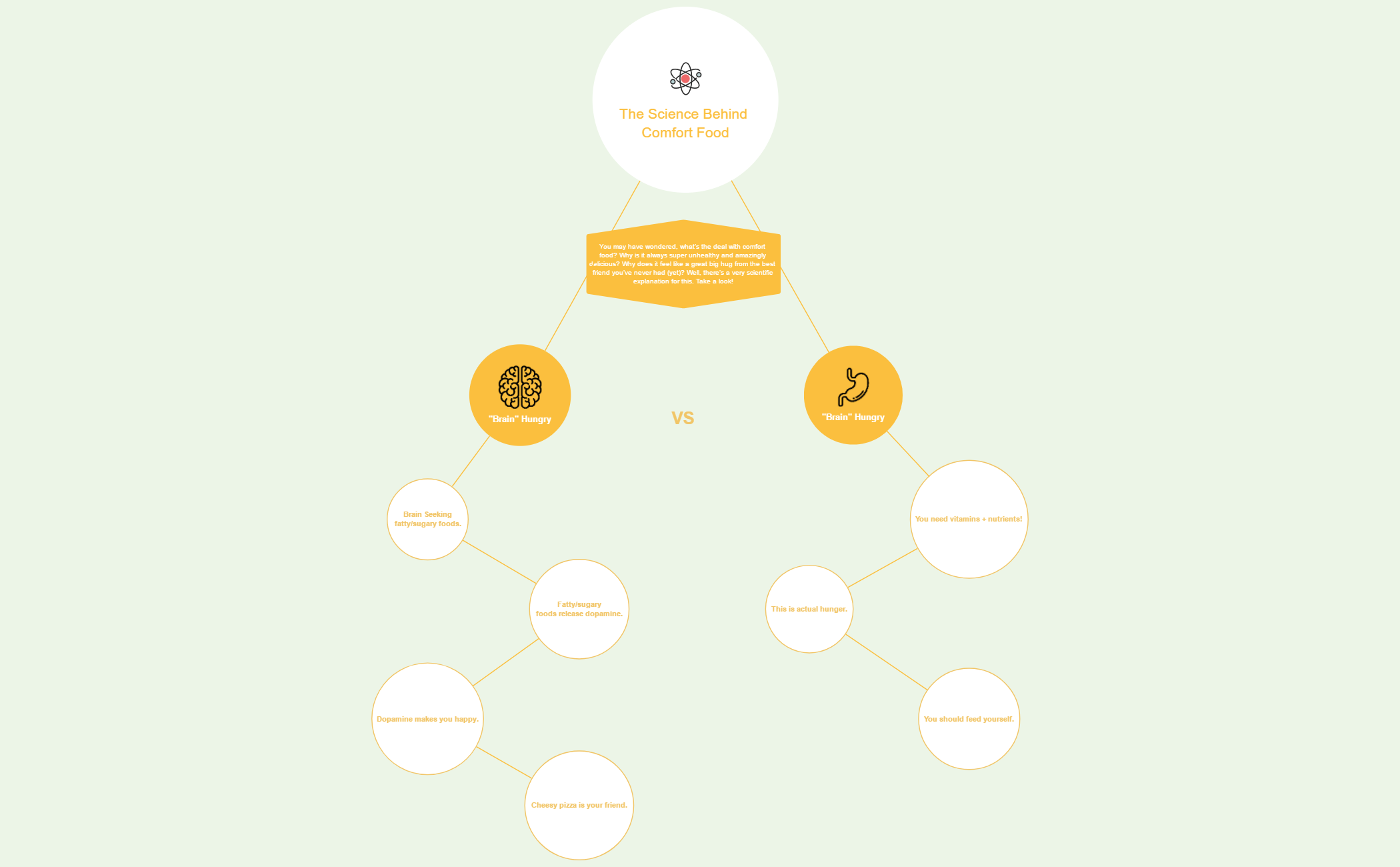
The Science Behind Comfort Food mind map template explores the neurological and psychological reasons why people crave fatty, sugary foods when stressed or hungry. It covers 12 nodes across a single sheet, contrasting genuine hunger (which requires vitamins and nutrients) with brain-driven cravings for comfort foods like cheesy pizza. Key concepts include dopamine release from fatty/sugary foods, the brain's reward-seeking behavior, and the emotional comfort associated with unhealthy meals. This template is ideal for educators, health coaches, or anyone curious about the biology of food cravings.
使用条款Planning a nutrition workshop for students or clients
Preparing a psychology lecture on reward systems and eating behavior
Personal reflection on emotional eating patterns
Open the .xmind file to explore the central topic and the twelve pre-defined nodes covering neurological and psychological food cravings.
Replace existing examples like cheesy pizza with your own comfort foods and add new branches to include personal research or specific biological data.
Save your completed mind map as an image or PDF to use for educational handouts or present your work directly within the Xmind application.
It explains why people crave unhealthy comfort foods, covering brain chemistry, dopamine release, and the difference between actual hunger and emotional cravings.
Use it to teach students about the neurological basis of food cravings, with nodes like 'Dopamine makes you happy' and 'You need vitamins + nutrients'.
Yes, you can customize all nodes, add your own examples, and rearrange the branches to fit your lesson or presentation.
It contrasts two states: actual hunger (needing nutrients) versus brain-driven cravings for fatty/sugary foods, helping users understand the difference.
Absolutely. It helps you recognize when cravings are emotional rather than physical, supporting healthier eating habits.
把你的思维导图模板分享给全球创作者,从你的作品中获得收益。

