


'%3e%3cpath%20fill-rule='evenodd'%20clip-rule='evenodd'%20d='M16.0002%203.2002C8.93095%203.2002%203.2002%208.93095%203.2002%2016.0002C3.2002%2023.0695%208.93095%2028.8002%2016.0002%2028.8002C23.0695%2028.8002%2028.8002%2023.0695%2028.8002%2016.0002C28.8002%208.93095%2023.0695%203.2002%2016.0002%203.2002ZM5.6002%2016.0002C5.6002%2010.2564%2010.2564%205.6002%2016.0002%205.6002C21.744%205.6002%2026.4002%2010.2564%2026.4002%2016.0002C26.4002%2021.744%2021.744%2026.4002%2016.0002%2026.4002C10.2564%2026.4002%205.6002%2021.744%205.6002%2016.0002ZM16.0002%208.0002C11.5819%208.0002%208.0002%2011.5819%208.0002%2016.0002C8.0002%2020.4184%2011.5819%2024.0002%2016.0002%2024.0002C20.4184%2024.0002%2024.0002%2020.4184%2024.0002%2016.0002C24.0002%2011.5819%2020.4184%208.0002%2016.0002%208.0002ZM10.4002%2016.0002C10.4002%2012.9074%2012.9074%2010.4002%2016.0002%2010.4002C19.093%2010.4002%2021.6002%2012.9074%2021.6002%2016.0002C21.6002%2019.093%2019.093%2021.6002%2016.0002%2021.6002C12.9074%2021.6002%2010.4002%2019.093%2010.4002%2016.0002ZM16.0002%2013.6002C14.6747%2013.6002%2013.6002%2014.6747%2013.6002%2016.0002C13.6002%2017.3256%2014.6747%2018.4002%2016.0002%2018.4002C17.3256%2018.4002%2018.4002%2017.3256%2018.4002%2016.0002C18.4002%2014.6747%2017.3256%2013.6002%2016.0002%2013.6002Z'%20fill='%234FA49A'/%3e%3c/g%3e%3cdefs%3e%3cclipPath%20id='clip0_11502_52989'%3e%3crect%20width='32'%20height='32'%20fill='white'/%3e%3c/clipPath%3e%3c/defs%3e%3c/svg%3e)

Speech-language pathologists and rehabilitation therapists
Setting collaborative therapy goals with a patient who has aphasia
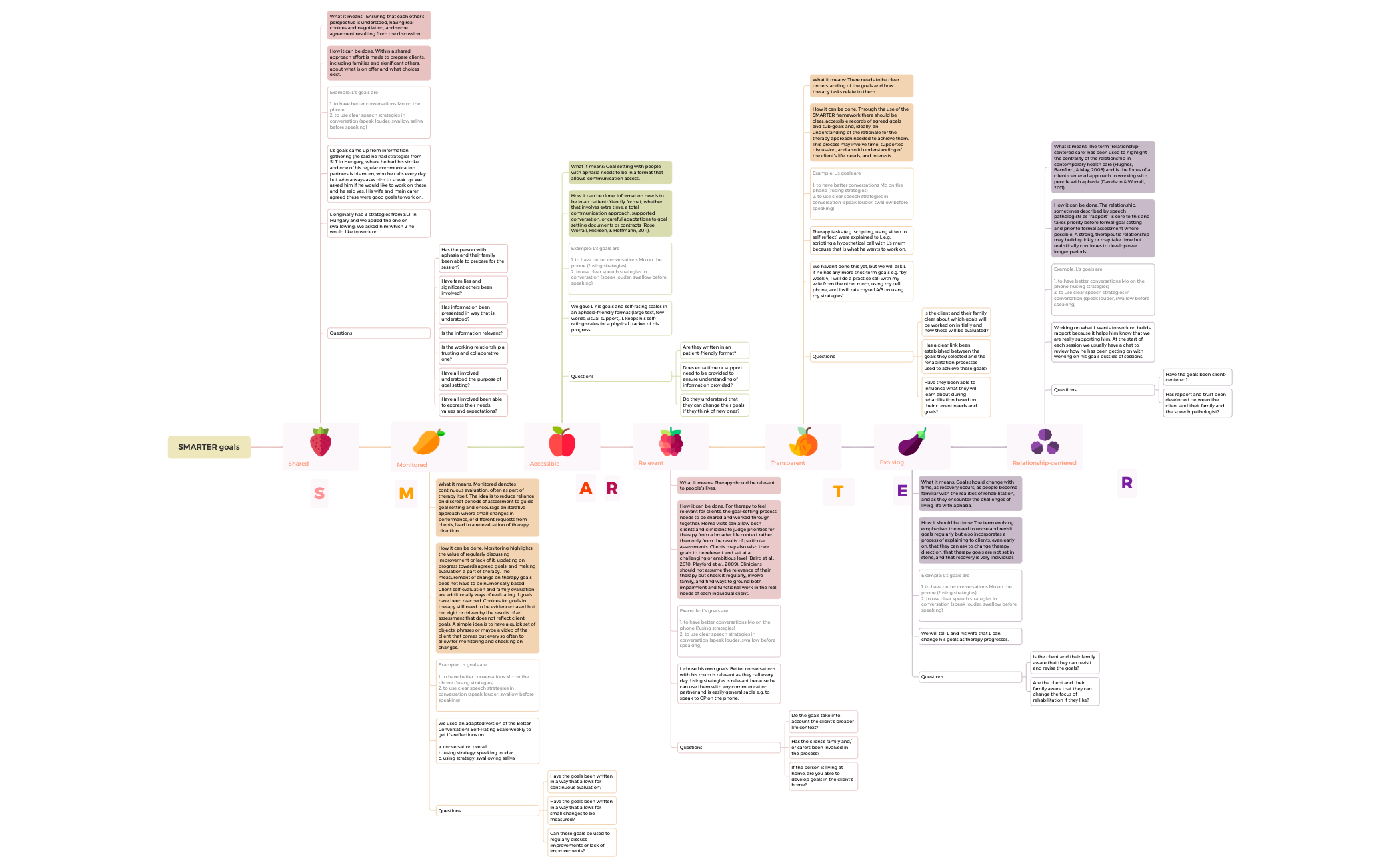
The SMARTER goals mind map template expands the classic SMART framework into 8 actionable dimensions—Shared, Monitored, Accessible, Relevant, Transparent, Evolving, Relationship-centered, plus the original S, M, A, R, E, T—with 75 nodes covering definitions, implementation strategies, and real-world examples. Designed for speech-language pathologists, therapists, and healthcare teams, this SMARTER goals template provides a structured approach to collaborative goal-setting with patients, especially those with aphasia. Key nodes like 'What it means' and 'How it can be done' under each dimension offer concrete guidance, while the 'Example' node for 'L's goals' illustrates practical application. This SMARTER goals cheat sheet helps practitioners ensure goals are truly patient-centered, measurable, and adaptable over time.
Условия использованияSetting collaborative therapy goals with a patient who has aphasia
Reviewing and updating patient goals during a weekly team huddle
Training new clinicians on patient-centered goal-setting frameworks
Open the template in Xmind to explore the eight dimensions and their corresponding guidance nodes like 'What it means' and 'How it can be done'.
Replace the example patient data with your own specific goals and tailor the 'Questions' nodes to fit your unique clinical environment.
Utilize the template as a living document by updating the 'Monitored' and 'Evolving' branches to track patient progress over time.
The template covers 8 dimensions (Shared, Monitored, Accessible, Relevant, Transparent, Evolving, Relationship-centered, plus S, M, A, R, E, T) with definitions, how-to strategies, examples, and reflective questions for each.
Start by reviewing each dimension's 'What it means' node, then apply the 'How it can be done' suggestions. Use the 'Example' nodes to model patient-specific goals, and adapt the 'Questions' nodes for collaborative discussion.
Yes, the .xmind file is fully editable. You can add, remove, or modify nodes, change colors, and insert icons to tailor it to your clinical or personal goal-setting needs.
It emphasizes continuous evaluation through regular progress discussions and self-rating scales, reducing reliance on periodic formal assessments.
Absolutely. Replace the placeholder example with your own patient's goals, strategies, and progress tracking details to make the template personally relevant.
Поделитесь своими шаблонами интеллект-карт с авторами по всему миру и начните зарабатывать на своих работах.

