


'%3e%3cpath%20d='M9.59961%204H22.3996'%20stroke='%23FF9334'%20stroke-width='1.92'%20stroke-linecap='round'/%3e%3cpath%20d='M12.0001%204V12.8L7.20006%2025.6C6.72006%2026.928%207.68006%2028%209.12006%2028H22.8801C24.3201%2028%2025.2801%2026.928%2024.8001%2025.6L20.0001%2012.8V4'%20stroke='%23FF9334'%20stroke-width='1.92'%20stroke-linecap='round'%20stroke-linejoin='round'/%3e%3cpath%20d='M9.12012%2019.2002H22.8801'%20stroke='%23FF9334'%20stroke-width='1.92'/%3e%3cpath%20d='M12%2024C12.5523%2024%2013%2023.5523%2013%2023C13%2022.4477%2012.5523%2022%2012%2022C11.4477%2022%2011%2022.4477%2011%2023C11%2023.5523%2011.4477%2024%2012%2024Z'%20fill='%23FF9334'/%3e%3cpath%20d='M19.5%2024C20.3284%2024%2021%2023.3284%2021%2022.5C21%2021.6716%2020.3284%2021%2019.5%2021C18.6716%2021%2018%2021.6716%2018%2022.5C18%2023.3284%2018.6716%2024%2019.5%2024Z'%20fill='%23FF9334'/%3e%3cpath%20d='M16%2026C16.5523%2026%2017%2025.5523%2017%2025C17%2024.4477%2016.5523%2024%2016%2024C15.4477%2024%2015%2024.4477%2015%2025C15%2025.5523%2015.4477%2026%2016%2026Z'%20fill='%23FF9334'/%3e%3c/g%3e%3cdefs%3e%3cclipPath%20id='clip0_11502_53328'%3e%3crect%20width='32'%20height='32'%20fill='white'/%3e%3c/clipPath%3e%3c/defs%3e%3c/svg%3e)

High school or college students studying cell biology
Preparing for a biology exam on cell structure and function
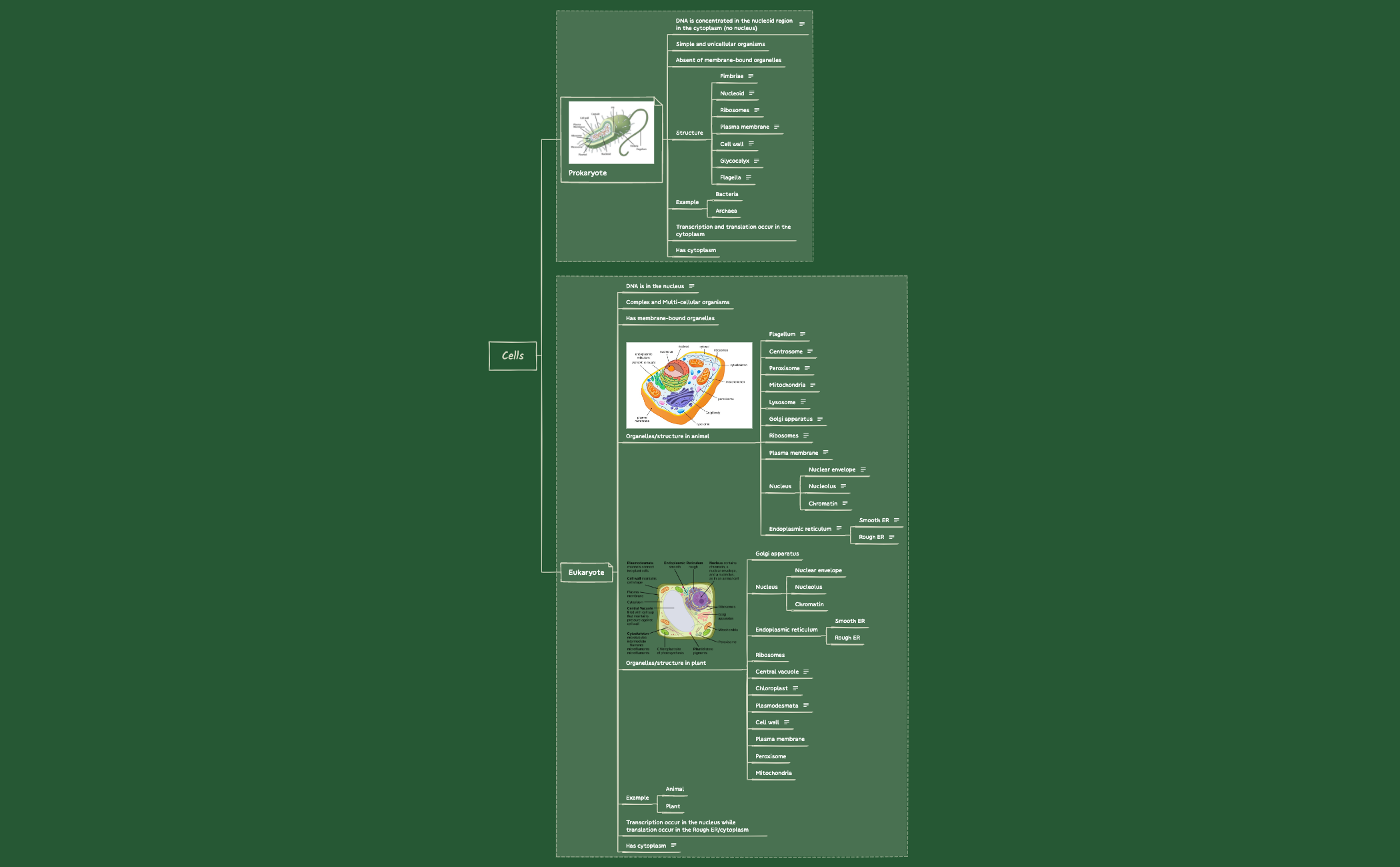
This Prokaryote vs Eukaryote mind map template, created by NURAIHANAH NAJIHAH BINTI ZAIDI, provides a detailed comparison of prokaryotic and eukaryotic cells with 62 nodes covering structure, organelles, and examples. It is ideal for biology students and educators studying cellular biology. The template is organized into two main branches: 'Prokaryote' and 'Eukaryote', each detailing key characteristics such as 'DNA is concentrated in the nucleoid region in the cytoplasm (no nucleus)' for prokaryotes and 'DNA is in the nucleus' for eukaryotes. It also includes specific organelles like 'Ribosomes', 'Mitochondria', and 'Chloroplast', as well as examples such as 'Bacteria' and 'Archaea' for prokaryotes, and 'Animal' and 'Plant' for eukaryotes. This Prokaryote vs Eukaryote cheat sheet serves as a comprehensive study aid for comparing cell types.
Условия использованияPreparing for a biology exam on cell structure and function
Designing a lesson plan to teach the differences between prokaryotic and eukaryotic cells
Creating a quick reference guide for laboratory work involving cell types
Launch the .xmind file to navigate the primary Prokaryote and Eukaryote branches containing 62 detailed nodes.
Examine specific organelles like the nucleus and ribosomes while adding your own notes or images to personalize the comparison.
Save your completed cellular biology study guide as a PDF or image file for offline review and academic sharing.
The template includes 62 nodes covering the structure, organelles, and examples of prokaryotic and eukaryotic cells. It features branches for 'Prokaryote' and 'Eukaryote', with detailed sub-nodes like 'Nucleoid', 'Ribosomes', 'Mitochondria', and 'Chloroplast'.
Open the .xmind file in Xmind, then explore the two main branches to compare prokaryotic and eukaryotic cells. You can add notes, color-code organelles, or expand on examples like 'Bacteria' and 'Animal' to reinforce learning.
Yes, the template is fully editable in Xmind. You can modify node text, add new branches, or reorganize the layout to suit your study needs.
Key differences include the presence of a nucleus (eukaryotes) vs. nucleoid region (prokaryotes), membrane-bound organelles (eukaryotes) vs. absent (prokaryotes), and the location of transcription and translation.
Absolutely. The template provides a clear visual comparison that can be used as a lecture aid or handout. You can project it or print it for classroom discussions.
Поделитесь своими шаблонами интеллект-карт с авторами по всему миру и начните зарабатывать на своих работах.

