


'%3e%3cpath%20d='M9.59961%204H22.3996'%20stroke='%23FF9334'%20stroke-width='1.92'%20stroke-linecap='round'/%3e%3cpath%20d='M12.0001%204V12.8L7.20006%2025.6C6.72006%2026.928%207.68006%2028%209.12006%2028H22.8801C24.3201%2028%2025.2801%2026.928%2024.8001%2025.6L20.0001%2012.8V4'%20stroke='%23FF9334'%20stroke-width='1.92'%20stroke-linecap='round'%20stroke-linejoin='round'/%3e%3cpath%20d='M9.12012%2019.2002H22.8801'%20stroke='%23FF9334'%20stroke-width='1.92'/%3e%3cpath%20d='M12%2024C12.5523%2024%2013%2023.5523%2013%2023C13%2022.4477%2012.5523%2022%2012%2022C11.4477%2022%2011%2022.4477%2011%2023C11%2023.5523%2011.4477%2024%2012%2024Z'%20fill='%23FF9334'/%3e%3cpath%20d='M19.5%2024C20.3284%2024%2021%2023.3284%2021%2022.5C21%2021.6716%2020.3284%2021%2019.5%2021C18.6716%2021%2018%2021.6716%2018%2022.5C18%2023.3284%2018.6716%2024%2019.5%2024Z'%20fill='%23FF9334'/%3e%3cpath%20d='M16%2026C16.5523%2026%2017%2025.5523%2017%2025C17%2024.4477%2016.5523%2024%2016%2024C15.4477%2024%2015%2024.4477%2015%2025C15%2025.5523%2015.4477%2026%2016%2026Z'%20fill='%23FF9334'/%3e%3c/g%3e%3cdefs%3e%3cclipPath%20id='clip0_11502_53328'%3e%3crect%20width='32'%20height='32'%20fill='white'/%3e%3c/clipPath%3e%3c/defs%3e%3c/svg%3e)

Medical students and residents
Preparing for a medical oncology exam or board review
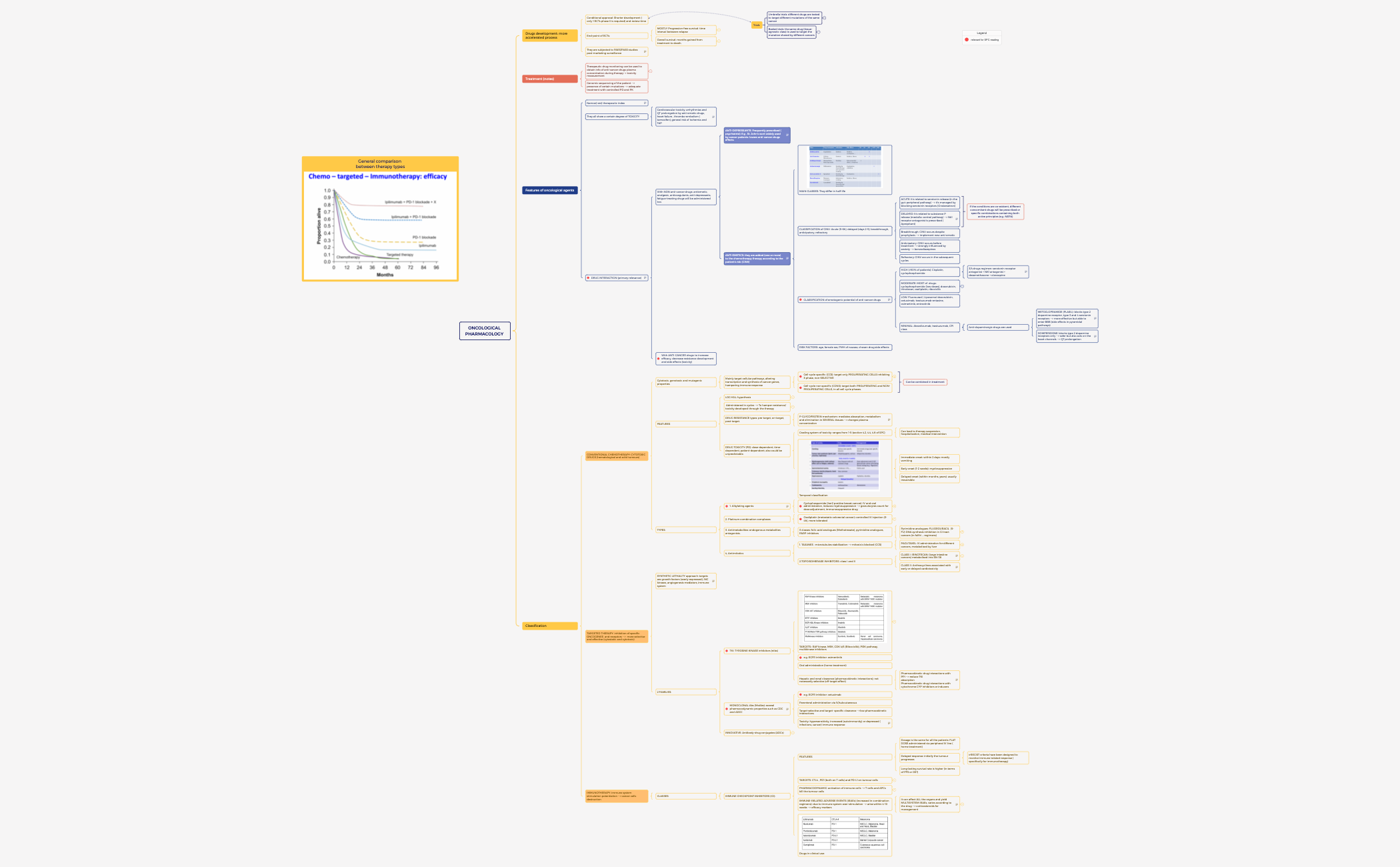
Oncological pharmacology mind map covers 128 nodes across drug development, classification, treatment, and clinical trials. It details accelerated drug approval processes (conditional approval requiring only one phase II RCT), endpoints like progression-free survival and overall survival, and post-marketing PAES/PASS studies. Key branches include 'Features of oncological agents' (narrow therapeutic index, cardiovascular toxicity, drug interactions with anti-emetics and anti-depressants), 'Classification' (conventional chemotherapy with log-kill hypothesis, targeted therapy via TKIs and monoclonal Abs, immunotherapy with immune checkpoint inhibitors), and innovative trial designs (umbrella and basket trials). This template serves as a comprehensive cheat sheet for medical professionals and students.
使用条款Preparing for a medical oncology exam or board review
Designing a new cancer treatment protocol or reviewing drug options
Teaching a course on cancer pharmacology or developing curriculum
Open the file in Xmind to navigate through the main branches covering drug development, treatment features, and clinical trial classifications.
Expand specific nodes to review detailed pharmacological notes and personalize the content by adding your own clinical examples or images.
Export your finalized oncological pharmacology mind map as a PDF, image, or outline to share with medical professionals or for study use.
The template covers drug development processes, classification of anticancer agents (conventional chemotherapy, targeted therapy, immunotherapy), features like toxicity and drug interactions, treatment monitoring, and clinical trial designs (umbrella and basket trials).
Open the .xmind file in Xmind, then review each branch systematically. Focus on 'Classification' for drug types, 'Features of oncological agents' for side effects, and 'Trials' for study designs. Customize by adding your own notes or highlighting key concepts.
Yes, the Xmind template is fully editable. You can add, remove, or rearrange nodes. Export as PDF or image for printing, or share the .xmind file for collaboration.
The template classifies drugs into conventional chemotherapy (alkylating agents, platinum complexes, antimetabolites, antimitotics), targeted therapy (TKIs, monoclonal antibodies, ADCs), and immunotherapy (immune checkpoint inhibitors).
The 'Features of oncological agents' branch details cardiovascular toxicity (arrhythmias, QT prolongation, thrombo-embolism), drug interactions (with anti-emetics, anti-depressants), and factors like dose-dependence and patient variability.
把你的思维导图模板分享给全球创作者,从你的作品中获得收益。

