


'%3e%3cpath%20d='M7%2010C8.65685%2010%2010%208.65685%2010%207C10%205.34315%208.65685%204%207%204C5.34315%204%204%205.34315%204%207C4%208.65685%205.34315%2010%207%2010Z'%20stroke='%234FA49A'%20stroke-width='1.92'/%3e%3cpath%20d='M10.5%207.2002H19.2C21.856%207.2002%2024%209.3442%2024%2012.0002C24%2014.6562%2021.856%2016.8002%2019.2%2016.8002H12.8C10.144%2016.8002%208%2018.9442%208%2021.6002C8%2024.2562%2010.144%2026.4002%2012.8%2026.4002H20.8'%20stroke='%234FA49A'%20stroke-width='2.2'%20stroke-linecap='round'%20stroke-linejoin='round'/%3e%3cpath%20d='M22.3882%2029.4343C22.1221%2029.6265%2021.8905%2029.7226%2021.6933%2029.7226C21.511%2029.7226%2021.3681%2029.6437%2021.2646%2029.486C21.1611%2029.3283%2021.1094%2029.0992%2021.1094%2028.7986V24.0159C21.1094%2023.7153%2021.1611%2023.4837%2021.2646%2023.3211C21.3681%2023.1585%2021.511%2023.0771%2021.6933%2023.0771C21.8905%2023.0771%2022.1196%2023.1683%2022.3808%2023.3507L25.6481%2025.6939C25.9437%2025.9058%2026.0916%2026.1399%2026.0916%2026.3962C26.0916%2026.6426%2025.9487%2026.8692%2025.6628%2027.0762L22.3882%2029.4343Z'%20fill='%234FA49A'/%3e%3c/g%3e%3cdefs%3e%3cclipPath%20id='clip0_11502_53067'%3e%3crect%20width='32'%20height='32'%20fill='white'/%3e%3c/clipPath%3e%3c/defs%3e%3c/svg%3e)

Transit designers and urban planners
Planning a station redesign or wayfinding upgrade
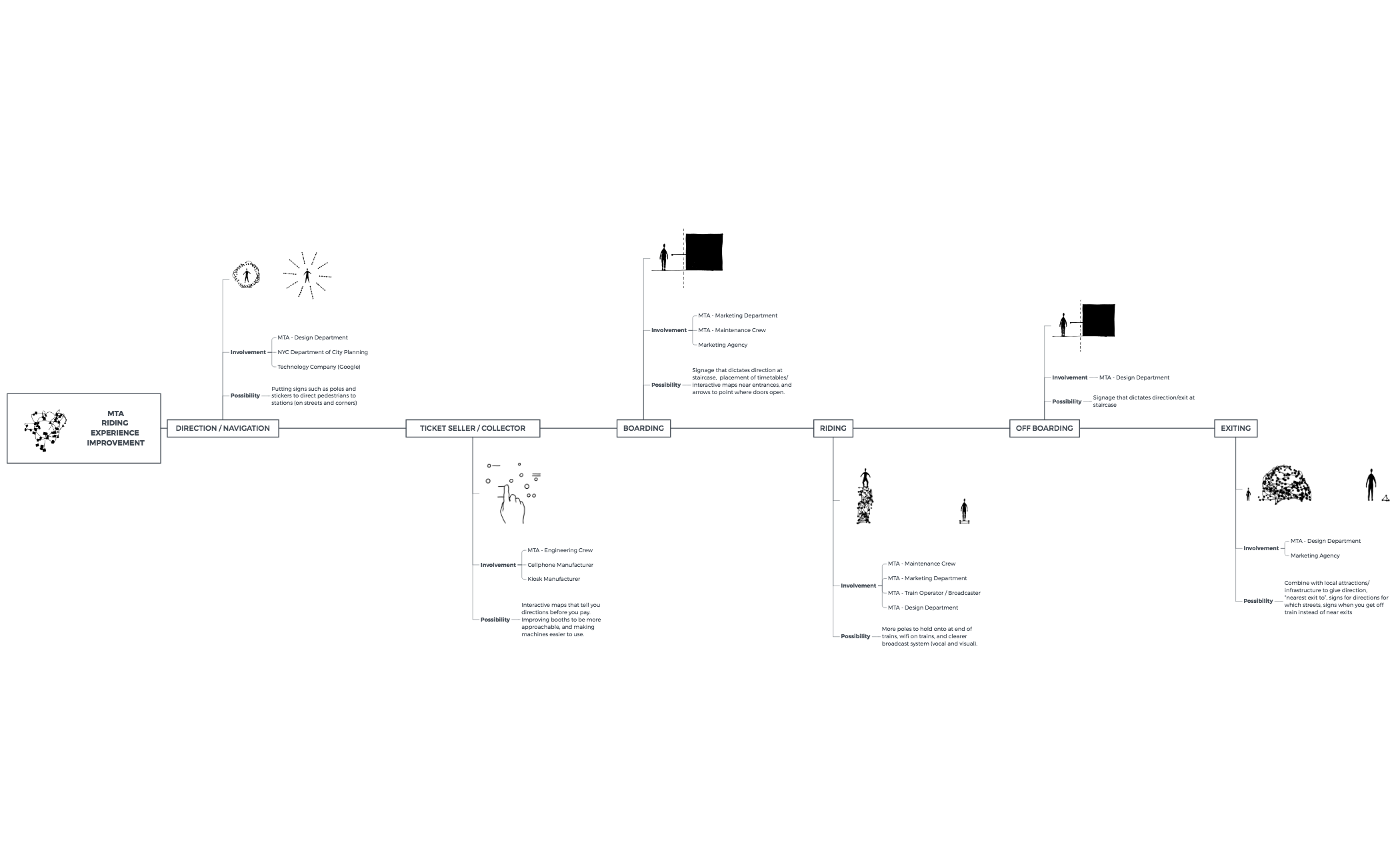
The MTA Riding Experience Improvement mind map template breaks down the subway rider's journey into six key phases—DIRECTION / NAVIGATION, TICKET SELLER / COLLECTOR, BOARDING, RIDING, OFF BOARDING, and EXITING—with 47 nodes covering stakeholder involvement and improvement possibilities. Designed for transit planners, designers, and urban strategists, this MTA mind map template identifies specific pain points such as 'Signage that dictates direction at staircase' and 'clearer broadcast system (vocal and visual)' to enhance commuter satisfaction. It maps collaborations with entities like 'NYC Department of City Planning' and 'Technology Company (Google)' to propose actionable solutions, making it a practical MTA cheat sheet for transit experience overhauls.
Terms and ConditionsPlanning a station redesign or wayfinding upgrade
Evaluating current rider pain points for a service improvement initiative
Developing a grant proposal or pilot project for smart transit solutions
Open the template in Xmind to review the six predefined journey phases and their associated stakeholder nodes.
Modify the existing branches to reflect your specific transit stakeholders and add new nodes for localized improvement possibilities.
Complete your transit experience overhaul plan and export the map as a PDF or image to collaborate with urban planners.
It's a structured template for analyzing and improving the subway rider's journey from navigation to exiting, identifying stakeholders and improvement opportunities at each stage.
Transit planners, urban designers, MTA departments, and marketing agencies can use it to brainstorm and document rider experience enhancements.
It follows the rider's journey in six phases: Direction/Navigation, Ticket Seller/Collector, Boarding, Riding, Off Boarding, and Exiting, each with involvement and possibility nodes.
Yes, you can edit all nodes to add your own stakeholders, ideas, or specific locations, making it adaptable to any transit system.
Yes, each phase lists concrete possibilities like 'interactive maps that tell you directions before you pay' and 'signage that dictates direction at staircase'.
Share your mind map templates with creators around the world and start earning from your work.

