


'%3e%3cpath%20d='M9.59961%204H22.3996'%20stroke='%23FF9334'%20stroke-width='1.92'%20stroke-linecap='round'/%3e%3cpath%20d='M12.0001%204V12.8L7.20006%2025.6C6.72006%2026.928%207.68006%2028%209.12006%2028H22.8801C24.3201%2028%2025.2801%2026.928%2024.8001%2025.6L20.0001%2012.8V4'%20stroke='%23FF9334'%20stroke-width='1.92'%20stroke-linecap='round'%20stroke-linejoin='round'/%3e%3cpath%20d='M9.12012%2019.2002H22.8801'%20stroke='%23FF9334'%20stroke-width='1.92'/%3e%3cpath%20d='M12%2024C12.5523%2024%2013%2023.5523%2013%2023C13%2022.4477%2012.5523%2022%2012%2022C11.4477%2022%2011%2022.4477%2011%2023C11%2023.5523%2011.4477%2024%2012%2024Z'%20fill='%23FF9334'/%3e%3cpath%20d='M19.5%2024C20.3284%2024%2021%2023.3284%2021%2022.5C21%2021.6716%2020.3284%2021%2019.5%2021C18.6716%2021%2018%2021.6716%2018%2022.5C18%2023.3284%2018.6716%2024%2019.5%2024Z'%20fill='%23FF9334'/%3e%3cpath%20d='M16%2026C16.5523%2026%2017%2025.5523%2017%2025C17%2024.4477%2016.5523%2024%2016%2024C15.4477%2024%2015%2024.4477%2015%2025C15%2025.5523%2015.4477%2026%2016%2026Z'%20fill='%23FF9334'/%3e%3c/g%3e%3cdefs%3e%3cclipPath%20id='clip0_11502_53328'%3e%3crect%20width='32'%20height='32'%20fill='white'/%3e%3c/clipPath%3e%3c/defs%3e%3c/svg%3e)

Biology students and exam candidates
Preparing for a plant biology exam covering vascular tissue structure and function.
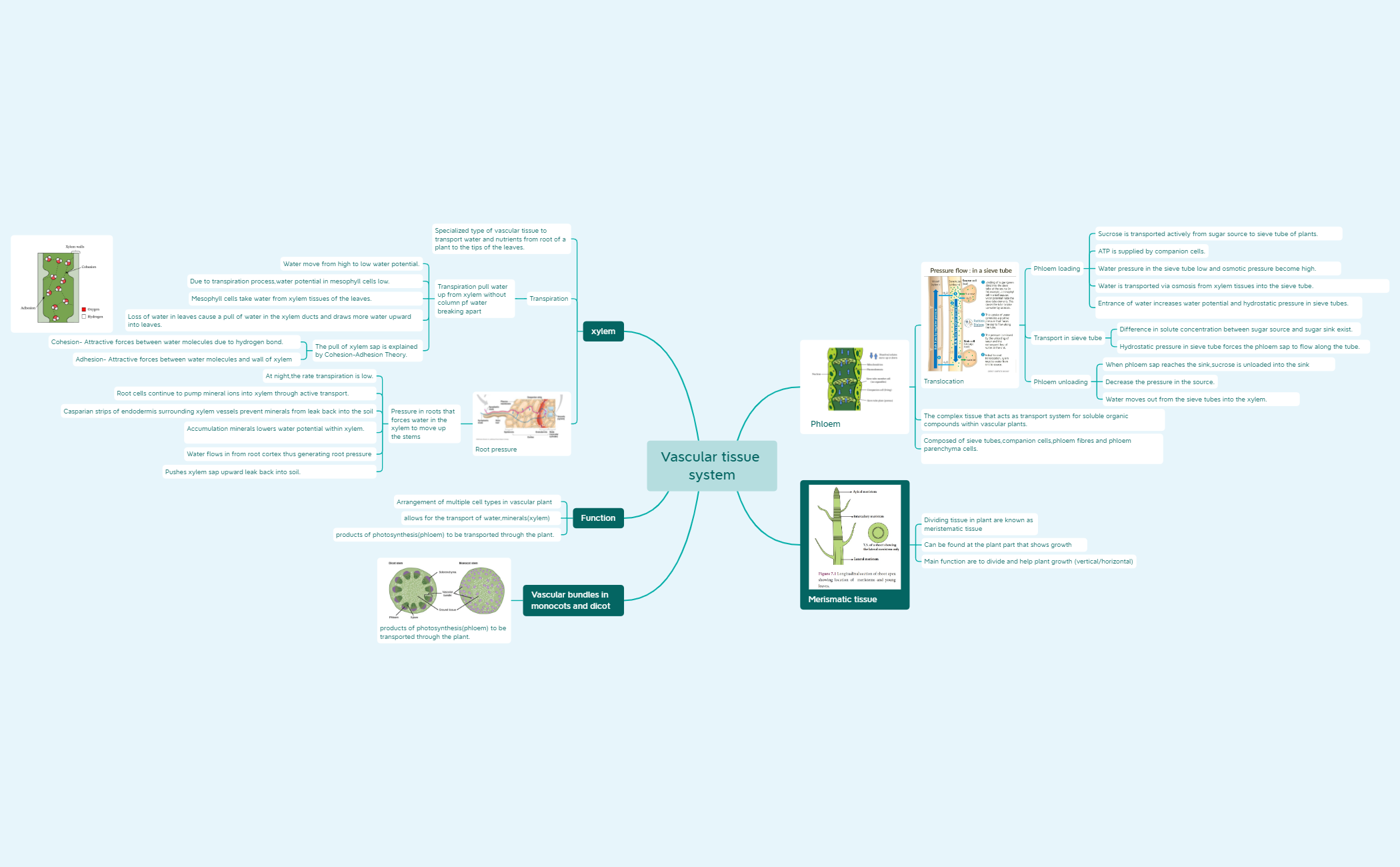
The Vascular Tissue System mind map template breaks down the structure, function, and significance of plant vascular tissues across 48 nodes. Designed for biology students and educators, it covers phloem, xylem, meristematic tissue, and vascular bundle types in monocots and dicots. Key processes like translocation and transpiration are detailed, including phloem loading, transport in sieve tubes, and the cohesion-adhesion theory. This template serves as a comprehensive study aid for plant biology.
Termos e condiçõesPreparing for a plant biology exam covering vascular tissue structure and function.
Designing a lecture or lesson on plant transport systems for undergraduate courses.
Reviewing key concepts like translocation and transpiration before a lab practical.
Launch the .xmind file to navigate the central vascular tissue system and expand the primary phloem and xylem branches.
Examine the 48 detailed nodes on plant biology and personalize the content by adding your own study notes or external links.
Finalize your study aid by exporting the completed vascular tissue map as a PDF, image, or outline for your presentation.
The template covers phloem, xylem, meristematic tissue, and vascular bundles in monocots and dicots, with detailed processes like translocation and transpiration.
Open the .xmind file in Xmind, then explore each branch—phloem, xylem, etc.—to review key concepts and processes. Customize by adding notes or images.
Yes, the template is fully editable in Xmind. You can modify node text, add new branches, or reorganize the layout to suit your study needs.
It explains the pull of xylem sap: water molecules cohere and adhere to xylem walls, allowing transpiration pull to move water upward without breaking the column.
Absolutely. You can expand the phloem loading branch with additional steps, diagrams, or references to specific plant species.
Compartilhe seus modelos de mapas mentais com criadores ao redor do mundo e comece a ganhar com seu trabalho.

