



Lisp beginners and students
Studying Lisp function syntax and parameter types for the first time
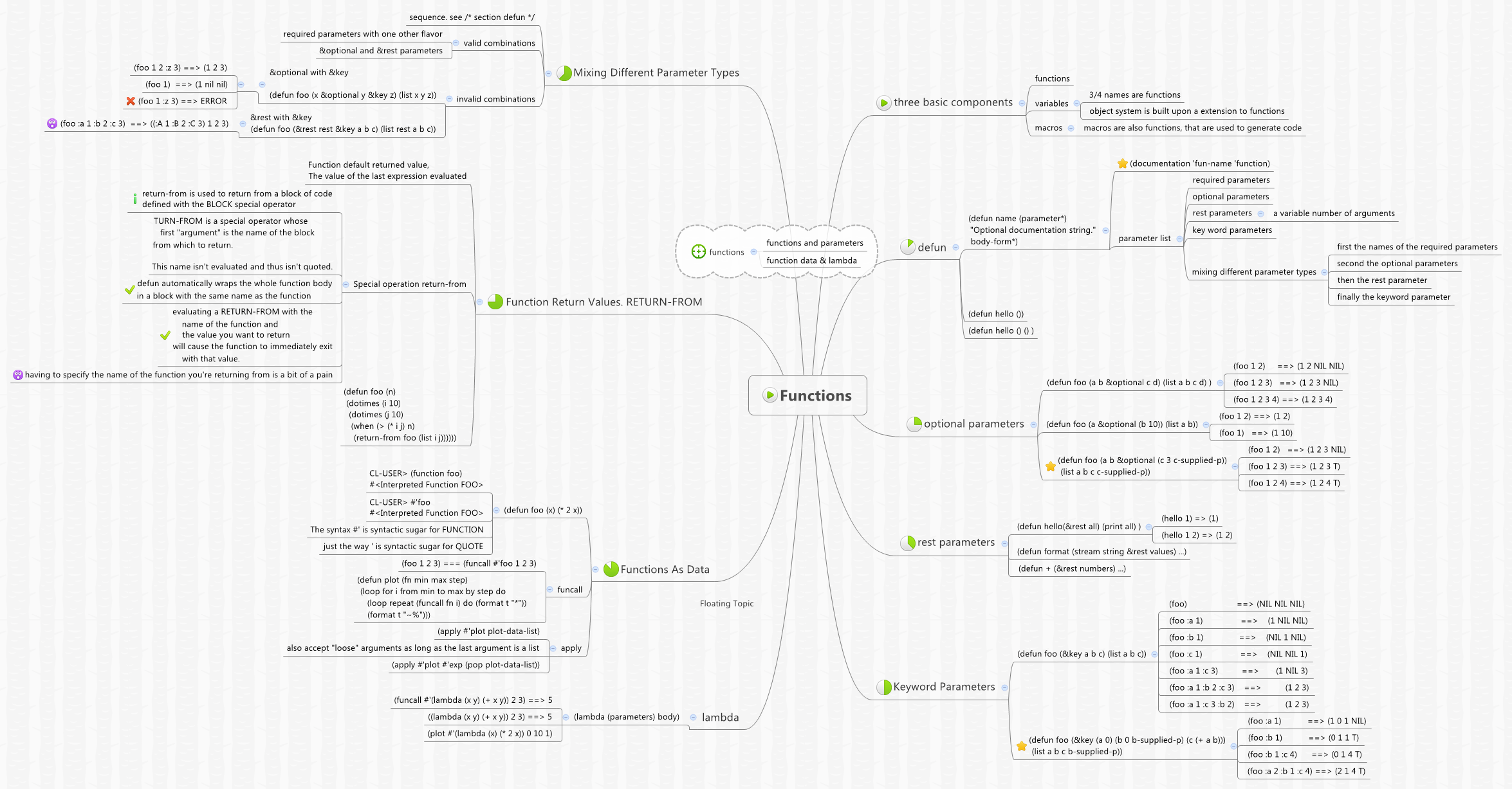
This mind map template, based on Chapter 5 of Practical Common Lisp (gigamonkeys.com/book/functions.html), covers the fundamentals of Lisp functions with 100 nodes organized into 10 branches. It explores three basic components (functions, variables, macros), details defun syntax, and explains optional parameters, rest parameters, keyword parameters, and mixing different parameter types. The template also covers function return values with RETURN-FROM, functions as data (funcall and apply), lambda expressions, and includes a floating topic for notes. Key nodes include 'three basic components', 'defun', and 'Function Return Values. RETURN-FROM'. This Functions cheat sheet is ideal for Lisp learners and programmers seeking a structured reference.
Условия использованияStudying Lisp function syntax and parameter types for the first time
Preparing a lecture or tutorial on Common Lisp functions
Reviewing advanced concepts like funcall, apply, and lambda before a coding session
Open the .xmind file in Xmind (desktop or web app).
Navigate through the branches: start with 'three basic components' to understand the foundation.
Click on any node (e.g., 'defun') to view its sub-nodes and code examples.
Edit or add your own Lisp function examples by double-clicking a node and typing.
Export the mind map as an image or PDF for study or sharing.
It covers defun, optional/rest/keyword parameters, mixing parameter types, function return values with RETURN-FROM, functions as data (funcall, apply), and lambda expressions, all from Practical Common Lisp Chapter 5.
Open the .xmind file in Xmind, then explore each branch: start with 'three basic components', then study 'defun' syntax, and practice with parameter examples in 'optional parameters', 'rest parameters', and 'Keyword Parameters'.
Yes, you can customize the template by adding your own examples, modifying parameter lists, or expanding branches with additional notes. All nodes are fully editable.
RETURN-FROM allows early exit from a named block (automatically the function body in defun), returning a specified value immediately, as shown in the (defun foo (n) ...) example.
Absolutely. The template organizes key concepts like 'Functions As Data' and 'lambda' with clear examples, making it a great visual aid for instructors and students.
Поделитесь своими шаблонами интеллект-карт с авторами по всему миру и начните зарабатывать на своих работах.

