


'%3e%3cpath%20d='M5.8002%2011.6C5%2011.8144%204.2002%2012.32%204.2002%2013.2V15.8C4.2002%2016.68%205%2017.1856%205.8002%2017.4L21.8002%2021.2C22.6802%2021.456%2023.4002%2020.832%2023.4002%2019.92V8.08001C23.4002%207.16801%2022.6802%206.54401%2021.8002%206.80001L5.8002%2011.6Z'%20stroke='%234FA49A'%20stroke-width='1.92'%20stroke-linejoin='round'/%3e%3cpath%20d='M8%2018V25.25C8%2026.7625%208.75%2028%209.66667%2028H11.3333C12.25%2028%2013%2026.7625%2013%2025.25V19.5'%20stroke='%234FA49A'%20stroke-width='1.92'%20stroke-linecap='round'%20stroke-linejoin='round'/%3e%3cpath%20d='M26.5996%2010C28.1996%2011.92%2028.1996%2016.08%2026.5996%2018'%20stroke='%234FA49A'%20stroke-width='1.92'%20stroke-linecap='round'/%3e%3c/g%3e%3cdefs%3e%3cclipPath%20id='clip0_11502_53007'%3e%3crect%20width='32'%20height='32'%20fill='white'/%3e%3c/clipPath%3e%3c/defs%3e%3c/svg%3e)

Creative directors and marketing managers
Planning a multi-channel advertising campaign for a new product launch
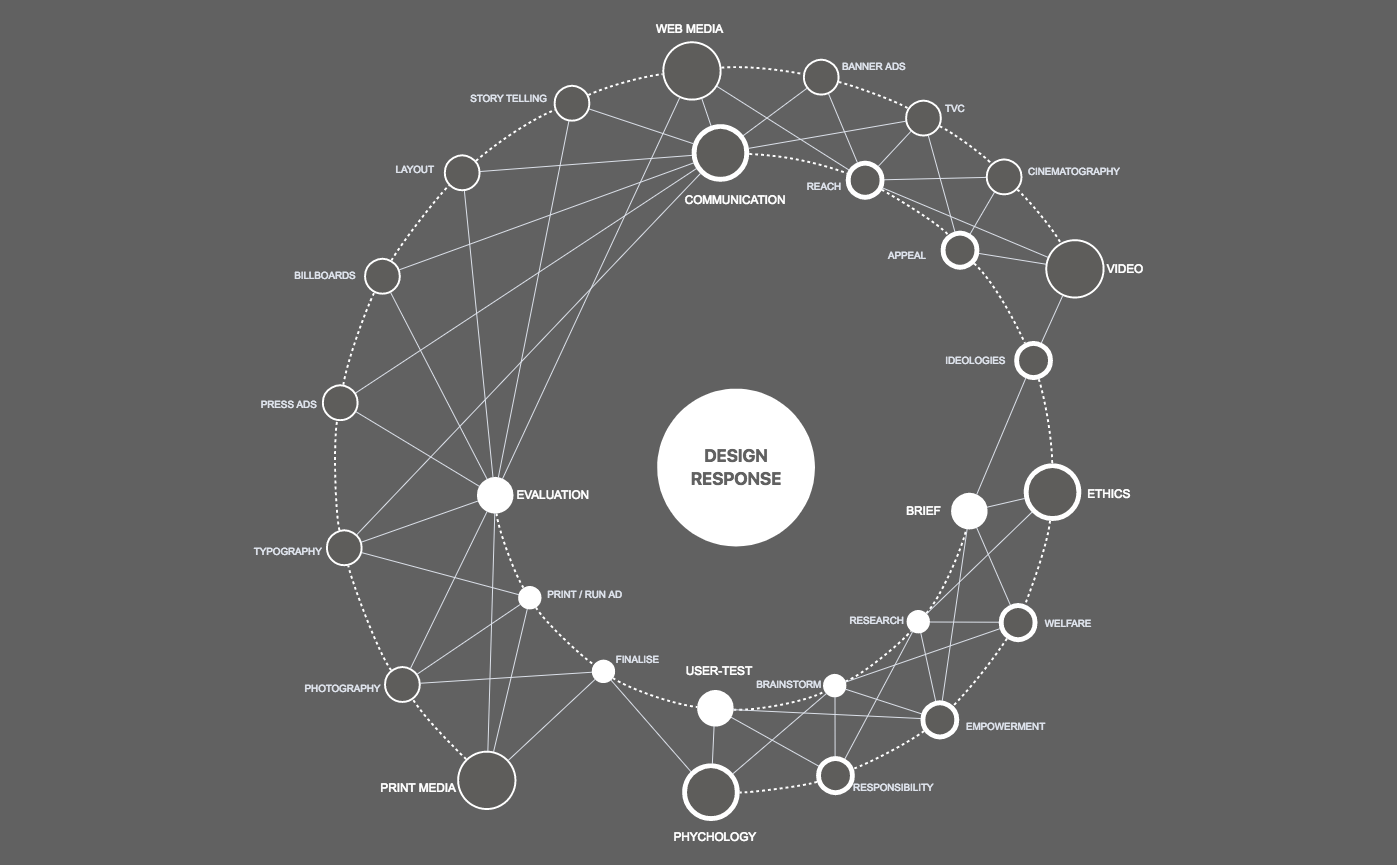
The Design Response mind map template is a comprehensive framework used by designers, marketers, and creative strategists to plan and evaluate advertising and media campaigns. It covers 27 key nodes across evaluation, user testing, briefs, psychology, print media, video, web media, communication, ethics, responsibility, empowerment, welfare, ideologies, appeal, reach, brainstorming, finalization, print/run ads, research, cinematography, TVC, banner ads, storytelling, layout, billboards, press ads, typography, and photography. This template helps teams systematically consider all aspects of a design response, from initial research and user testing to final ad production and ethical implications. The structure is organized as a radial mind map with the central topic 'Design Response' branching into major categories like 'evaluation', 'user-test', 'brief', and 'phychology', making it easy to navigate and expand. Key nodes such as 'story telling', 'typography', and 'cinematography' provide actionable checkpoints for creative execution.
Termos e condiçõesPlanning a multi-channel advertising campaign for a new product launch
Conducting a post-campaign evaluation to measure effectiveness and ethical impact
Brainstorming creative concepts for a TV commercial or video ad
Open the template in Xmind to review the central Design Response node and its comprehensive branches covering evaluation, user testing, and media types.
Replace the placeholder nodes with your specific campaign metrics, target audience psychology, and creative research to build a detailed strategic plan.
Utilize the brainstorming nodes to capture creative ideas before exporting your finalized design response as a PDF or image for team collaboration.
The template includes 27 nodes covering evaluation, user testing, briefs, psychology, print media, video, web media, communication, ethics, responsibility, empowerment, welfare, ideologies, appeal, reach, brainstorming, finalization, print/run ads, research, cinematography, TVC, banner ads, storytelling, layout, billboards, press ads, typography, and photography.
Start by filling in the 'brief' and 'research' nodes to define objectives. Then explore 'psychology' and 'appeal' to understand your audience. Use 'brainstorm' to generate ideas, then move through 'print media', 'video', and 'web media' branches to plan specific assets. Finally, use 'evaluation' and 'user-test' to refine.
Yes, the template is free to use and fully editable in Xmind. You can add, remove, or rename nodes to fit your project. It works on desktop and mobile apps.
Follow the natural flow: start with 'brief' and 'research', then explore 'psychology' and 'ideologies' to align messaging. Use 'story telling' and 'layout' for creative direction, then finalize with 'print / run ad' and 'evaluation'.
Absolutely. You can edit any node text, add notes, links, images, and even attach files. The template is a starting point—customize it to your workflow.
Compartilhe seus modelos de mapas mentais com criadores ao redor do mundo e comece a ganhar com seu trabalho.

