


'%3e%3cpath%20d='M9.59961%204H22.3996'%20stroke='%23FF9334'%20stroke-width='1.92'%20stroke-linecap='round'/%3e%3cpath%20d='M12.0001%204V12.8L7.20006%2025.6C6.72006%2026.928%207.68006%2028%209.12006%2028H22.8801C24.3201%2028%2025.2801%2026.928%2024.8001%2025.6L20.0001%2012.8V4'%20stroke='%23FF9334'%20stroke-width='1.92'%20stroke-linecap='round'%20stroke-linejoin='round'/%3e%3cpath%20d='M9.12012%2019.2002H22.8801'%20stroke='%23FF9334'%20stroke-width='1.92'/%3e%3cpath%20d='M12%2024C12.5523%2024%2013%2023.5523%2013%2023C13%2022.4477%2012.5523%2022%2012%2022C11.4477%2022%2011%2022.4477%2011%2023C11%2023.5523%2011.4477%2024%2012%2024Z'%20fill='%23FF9334'/%3e%3cpath%20d='M19.5%2024C20.3284%2024%2021%2023.3284%2021%2022.5C21%2021.6716%2020.3284%2021%2019.5%2021C18.6716%2021%2018%2021.6716%2018%2022.5C18%2023.3284%2018.6716%2024%2019.5%2024Z'%20fill='%23FF9334'/%3e%3cpath%20d='M16%2026C16.5523%2026%2017%2025.5523%2017%2025C17%2024.4477%2016.5523%2024%2016%2024C15.4477%2024%2015%2024.4477%2015%2025C15%2025.5523%2015.4477%2026%2016%2026Z'%20fill='%23FF9334'/%3e%3c/g%3e%3cdefs%3e%3cclipPath%20id='clip0_11502_53328'%3e%3crect%20width='32'%20height='32'%20fill='white'/%3e%3c/clipPath%3e%3c/defs%3e%3c/svg%3e)

Biomedical engineering students and educators
Preparing for a biomedical instrumentation exam that covers sensor classification and operational modes.
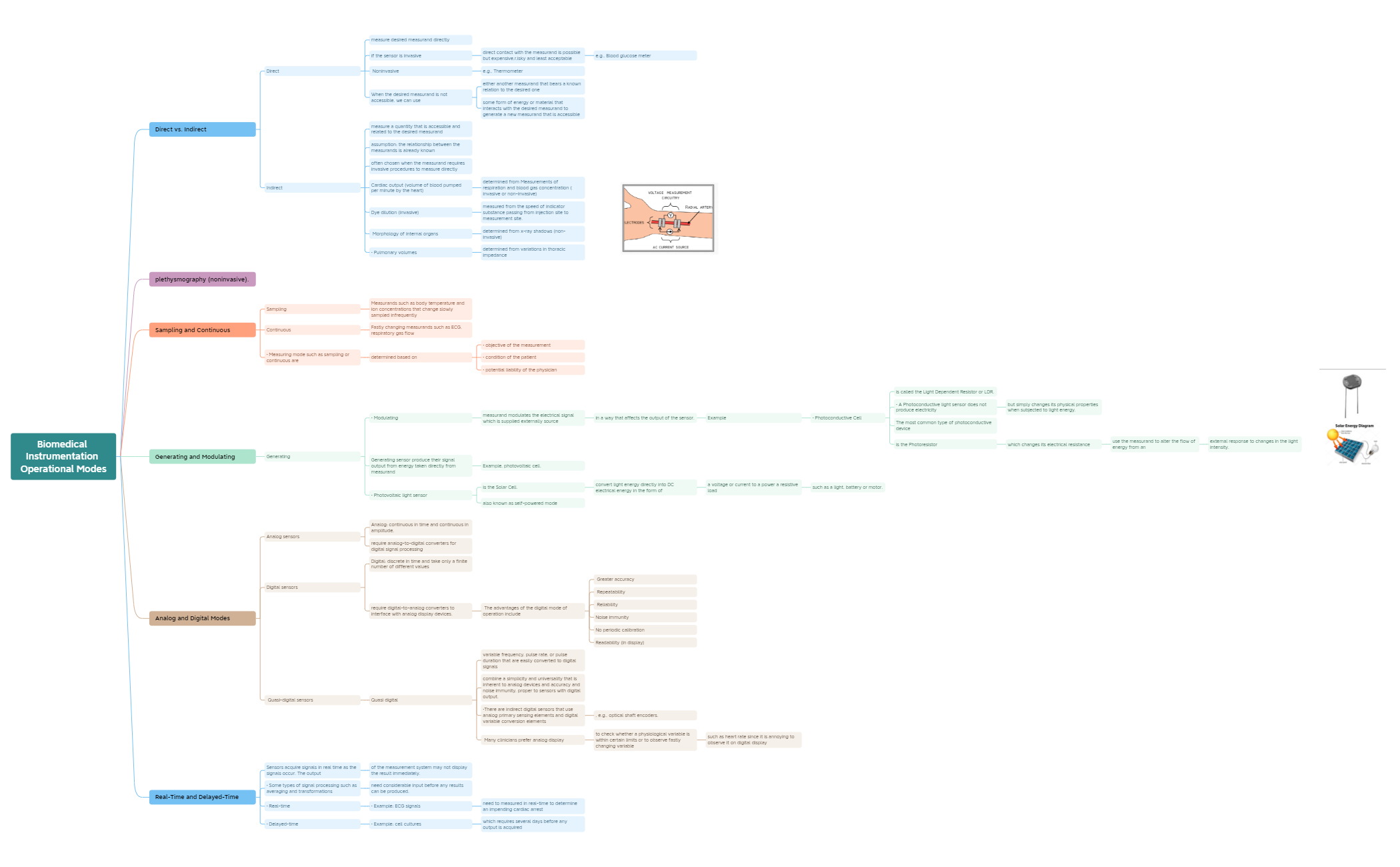
The Biomedical Instrumentation Operational Modes mind map provides a structured breakdown of 6 core mode classifications—Direct vs. Indirect, Sampling and Continuous, Generating and Modulating, Analog and Digital Modes, and Real-Time and Delayed-Time—covering 94 nodes. It explains key concepts such as 'Cardiac output' determined from respiration and blood gas concentration, 'Photovoltaic light sensor' as a self-powered generating sensor, and 'Quasi-digital sensors' that combine analog simplicity with digital noise immunity. This template serves as a comprehensive cheat sheet for students, engineers, and clinicians seeking to understand how biomedical measurements are categorized and applied.
Conditions d'utilisationPreparing for a biomedical instrumentation exam that covers sensor classification and operational modes.
Designing a new medical device and needing to decide between direct vs. indirect measurement approaches.
Reviewing clinical measurement protocols to choose between real-time ECG monitoring or delayed-time cell culture analysis.
Launch the .xmind file to navigate the central topic and expand the six primary branches of biomedical instrumentation modes.
Double-click nodes to add personal notes or create new sub-branches for specific sensors like photovoltaic or quasi-digital devices.
Apply custom colors and images to the hierarchy before exporting your completed cheat sheet as a PDF or image file.
The template covers 6 major mode classifications: Direct vs. Indirect, Sampling and Continuous, Generating and Modulating, Analog and Digital Modes, Real-Time and Delayed-Time, plus plethysmography. It includes 94 nodes with detailed examples like cardiac output, ECG, and photovoltaic sensors.
Open the .xmind file in Xmind, then explore each branch to understand mode definitions, examples, and clinical applications. You can add notes, color-code branches, or attach images to reinforce learning.
Yes, the Xmind template is fully editable. You can customize node text, add new branches, and export as PDF or image for printing.
Generating sensors (e.g., photovoltaic cell) produce output from energy taken directly from the measurand. Modulating sensors use an external electrical source that is modulated by the measurand.
Real-time is essential for critical signals like ECG to detect impending cardiac arrest. Delayed-time is used when processing requires considerable input, such as averaging cell culture growth over days.
Absolutely. You can add sub-nodes for specific sensor types, include advantages of digital mode, or attach reference links to ADC/DAC specifications.
Partagez vos modèles de cartes mentales avec des créateurs du monde entier et commencez à gagner avec votre travail.

