


'%3e%3cpath%20d='M9.59961%204H22.3996'%20stroke='%23FF9334'%20stroke-width='1.92'%20stroke-linecap='round'/%3e%3cpath%20d='M12.0001%204V12.8L7.20006%2025.6C6.72006%2026.928%207.68006%2028%209.12006%2028H22.8801C24.3201%2028%2025.2801%2026.928%2024.8001%2025.6L20.0001%2012.8V4'%20stroke='%23FF9334'%20stroke-width='1.92'%20stroke-linecap='round'%20stroke-linejoin='round'/%3e%3cpath%20d='M9.12012%2019.2002H22.8801'%20stroke='%23FF9334'%20stroke-width='1.92'/%3e%3cpath%20d='M12%2024C12.5523%2024%2013%2023.5523%2013%2023C13%2022.4477%2012.5523%2022%2012%2022C11.4477%2022%2011%2022.4477%2011%2023C11%2023.5523%2011.4477%2024%2012%2024Z'%20fill='%23FF9334'/%3e%3cpath%20d='M19.5%2024C20.3284%2024%2021%2023.3284%2021%2022.5C21%2021.6716%2020.3284%2021%2019.5%2021C18.6716%2021%2018%2021.6716%2018%2022.5C18%2023.3284%2018.6716%2024%2019.5%2024Z'%20fill='%23FF9334'/%3e%3cpath%20d='M16%2026C16.5523%2026%2017%2025.5523%2017%2025C17%2024.4477%2016.5523%2024%2016%2024C15.4477%2024%2015%2024.4477%2015%2025C15%2025.5523%2015.4477%2026%2016%2026Z'%20fill='%23FF9334'/%3e%3c/g%3e%3cdefs%3e%3cclipPath%20id='clip0_11502_53328'%3e%3crect%20width='32'%20height='32'%20fill='white'/%3e%3c/clipPath%3e%3c/defs%3e%3c/svg%3e)

Medical students and residents
Reviewing gastrointestinal pharmacology before a medical exam
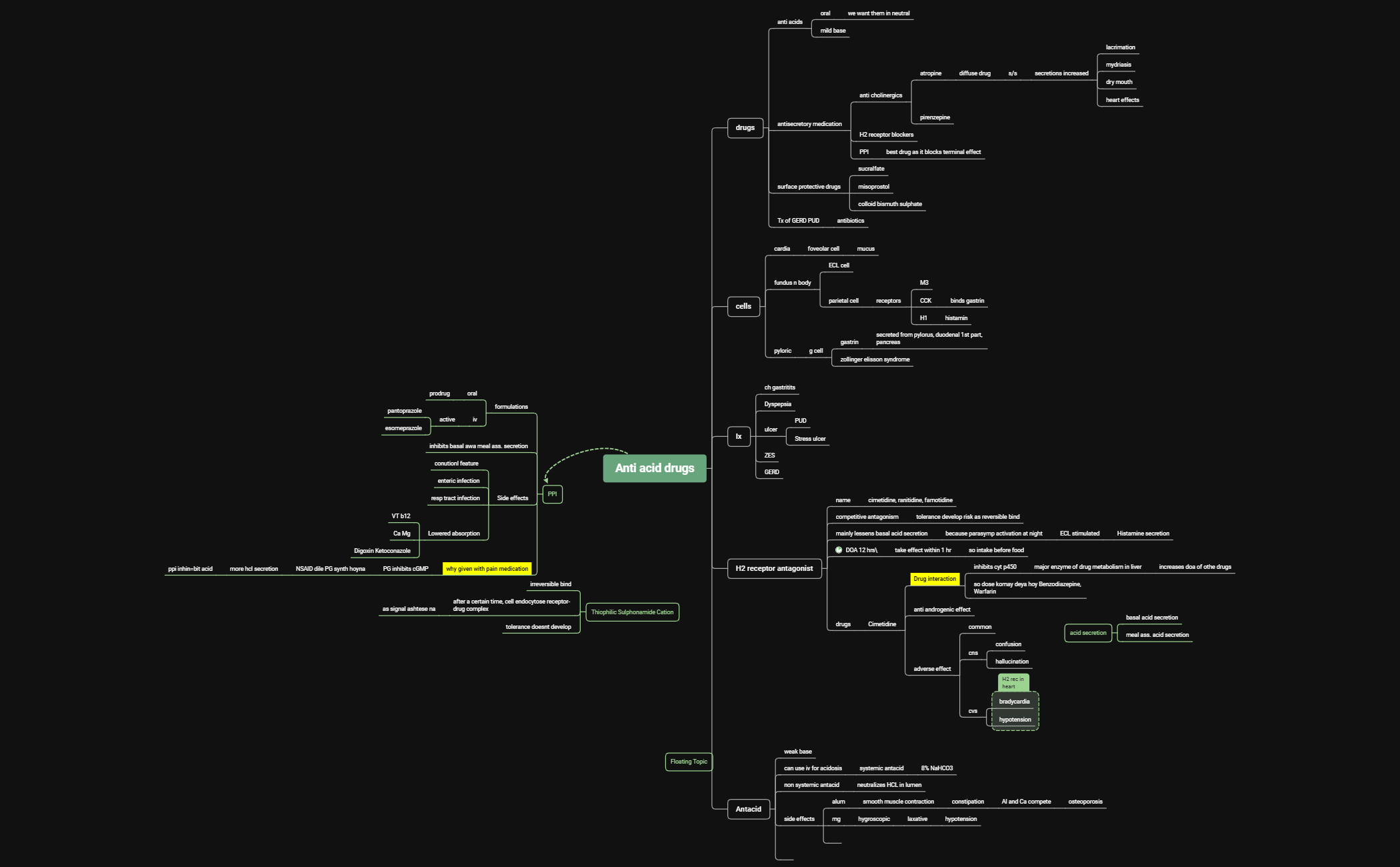
The Anti acid drugs mind map template provides a structured overview of 130 nodes covering the pharmacology of anti-acid medications, including drug classes, cellular targets, diagnostic indications, and side effects. It systematically breaks down antisecretory medications (H2 receptor antagonists, PPIs), antacids, surface protective drugs, and treatment protocols for GERD and PUD. Key nodes such as 'parietal cell receptors' and 'competitive antagonism' illustrate mechanisms, while 'Cimetidine drug interaction' and 'enteric infection' highlight clinical considerations. This template serves as a comprehensive cheat sheet for medical students and healthcare professionals studying gastrointestinal pharmacology.
Términos y condicionesReviewing gastrointestinal pharmacology before a medical exam
Preparing a lecture or study material on anti-acid drug mechanisms
Quickly referencing drug interactions and side effects during clinical rounds
Open the template in Xmind to navigate through the structured branches covering drug classes, cellular targets, and diagnostic indications.
Expand the 130 nodes to study specific mechanisms like parietal cell receptors and clinical considerations such as drug interactions.
Personalize the map with your own clinical cases before exporting it as a PDF or image for study and sharing.
The template covers 130 nodes across drug classes (antacids, H2 antagonists, PPIs), gastric cell types, diagnostic indications (GERD, PUD, ZES), mechanisms like competitive antagonism, and side effects such as enteric infection and lowered vitamin B12 absorption.
The PPI branch distinguishes oral prodrug and IV active formulations, explains inhibition of basal and meal-associated secretion, and lists side effects including neurological features, enteric/respiratory infections, and reduced absorption of vitamin B12, calcium, and magnesium.
H2 antagonists (cimetidine, ranitidine, famotidine) competitively block histamine receptors, mainly reducing basal acid secretion, and tolerance can develop. PPIs irreversibly bind to the proton pump, inhibit both basal and meal-stimulated secretion, and tolerance does not develop.
Yes, you can open the .xmind file in Xmind desktop or web, then add, edit, or delete nodes, change colors and icons, and reorganize branches to suit your study or teaching needs.
Absolutely. The template organizes pharmacology into clear branches—drugs, cells, investigations, and side effects—making it ideal for reviewing key concepts for medical exams like USMLE or pharmacology finals.
This node describes the irreversible binding of PPIs to the proton pump, the endocytosis of the receptor-drug complex, and explains why tolerance does not develop with these drugs.
Comparte tus plantillas de mapas mentales con creadores de todo el mundo y empieza a ganar con tu trabajo.

