AI Prompts for Marketing
Free

'%3e%3cg%20clip-path='url(%23clip1_11502_53441)'%3e%3cpath%20d='M9.06738%2011.9869C9.06738%2011.4052%209.53897%2010.9336%2010.1207%2010.9336H22.1207C22.7025%2010.9336%2023.174%2011.4052%2023.174%2011.9869C23.174%2012.5687%2022.7025%2013.0403%2022.1207%2013.0403H10.1207C9.53897%2013.0403%209.06738%2012.5687%209.06738%2011.9869Z'%20fill='%239F6EF0'/%3e%3cpath%20d='M9.06738%2015.9869C9.06738%2015.4052%209.53897%2014.9336%2010.1207%2014.9336H22.1207C22.7025%2014.9336%2023.174%2015.4052%2023.174%2015.9869C23.174%2016.5687%2022.7025%2017.0403%2022.1207%2017.0403H10.1207C9.53897%2017.0403%209.06738%2016.5687%209.06738%2015.9869Z'%20fill='%239F6EF0'/%3e%3cpath%20d='M9.06738%2019.9875C9.06738%2019.4058%209.53897%2018.9341%2010.1207%2018.9341H16.7874C17.3692%2018.9341%2017.8407%2019.4058%2017.8407%2019.9875C17.8407%2020.5693%2017.3692%2021.0408%2016.7874%2021.0408H10.1207C9.53897%2021.0408%209.06738%2020.5693%209.06738%2019.9875Z'%20fill='%239F6EF0'/%3e%3cpath%20fill-rule='evenodd'%20clip-rule='evenodd'%20d='M2.40039%2013.3206C2.40039%209.05695%205.85676%205.60059%2010.1204%205.60059H22.1204C26.3841%205.60059%2029.8404%209.05695%2029.8404%2013.3206V18.6539C29.8404%2022.9175%2026.3841%2026.3739%2022.1204%2026.3739H4.78706C3.46893%2026.3739%202.40039%2025.3054%202.40039%2023.9873V13.3206ZM10.1204%207.70726C7.02023%207.70726%204.50706%2010.2204%204.50706%2013.3206V23.9873C4.50706%2024.1419%204.63242%2024.2673%204.78706%2024.2673H22.1204C25.2205%2024.2673%2027.7337%2021.754%2027.7337%2018.6539V13.3206C27.7337%2010.2204%2025.2205%207.70726%2022.1204%207.70726H10.1204Z'%20fill='%239F6EF0'/%3e%3c/g%3e%3c/g%3e%3cdefs%3e%3cclipPath%20id='clip0_11502_53441'%3e%3crect%20width='32'%20height='32'%20fill='white'/%3e%3c/clipPath%3e%3cclipPath%20id='clip1_11502_53441'%3e%3crect%20width='32'%20height='32'%20fill='white'/%3e%3c/clipPath%3e%3c/defs%3e%3c/svg%3e)
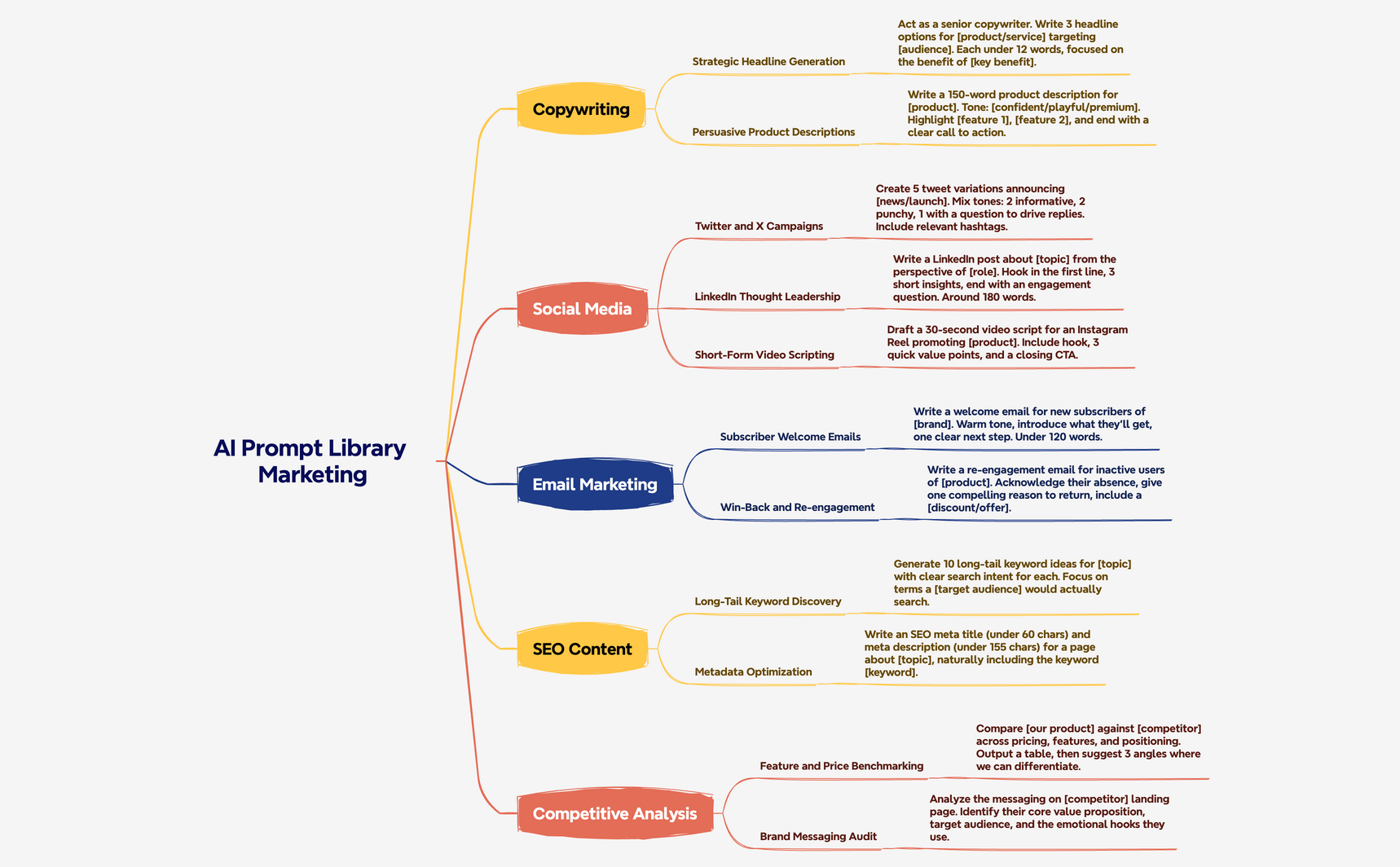
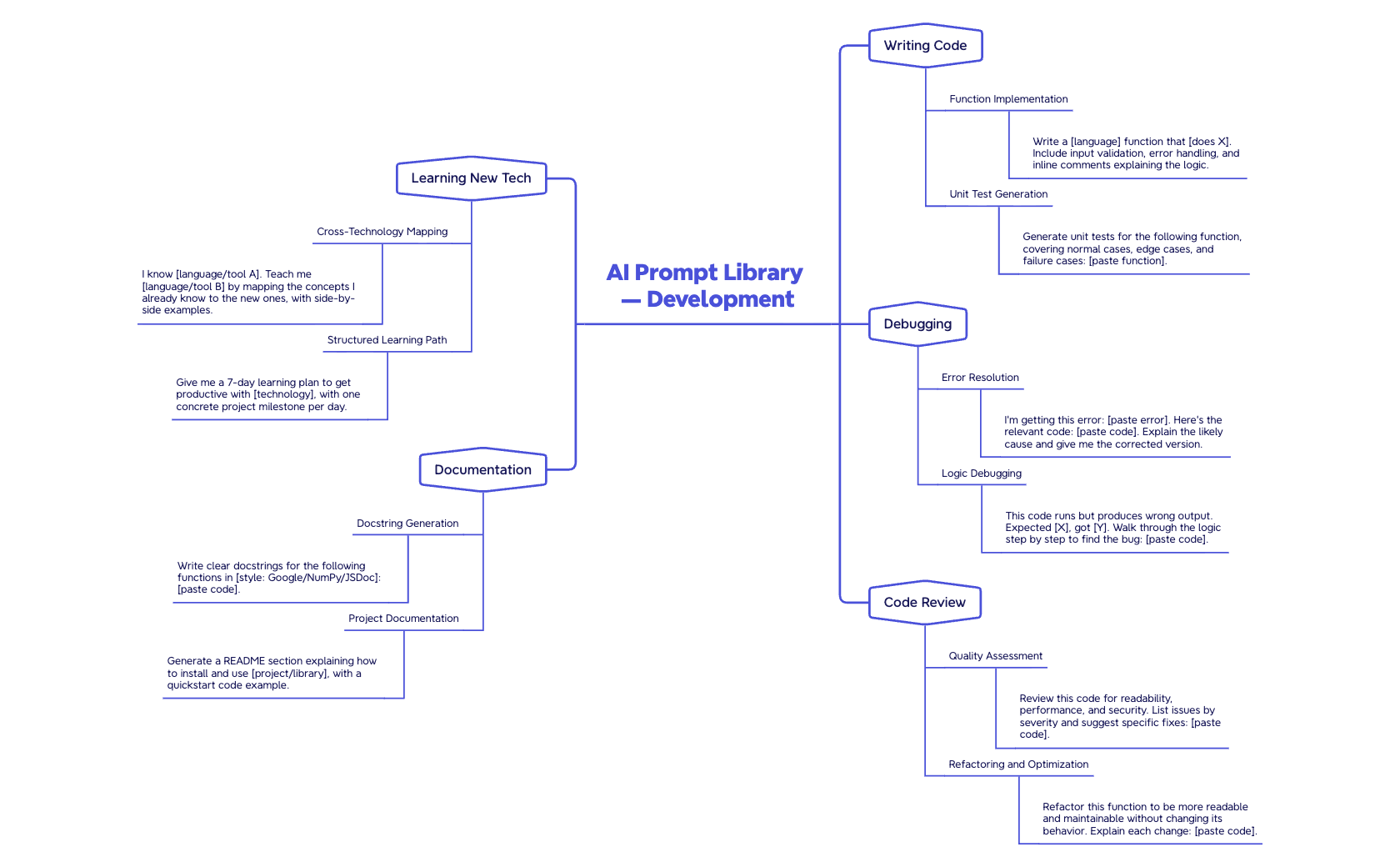
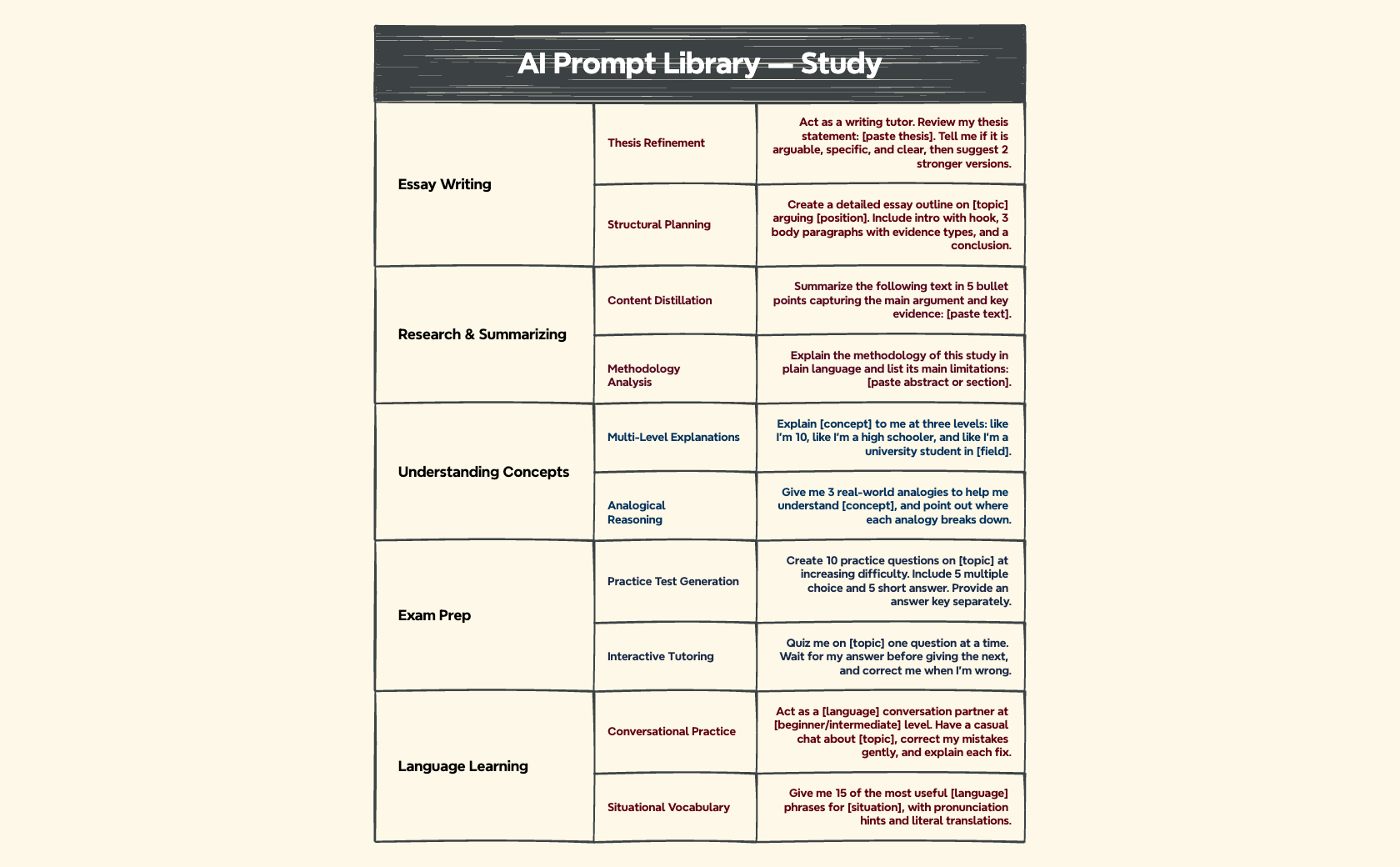
3 templates · Ready-to-use AI prompt templates to craft, organize, and reuse great prompts.
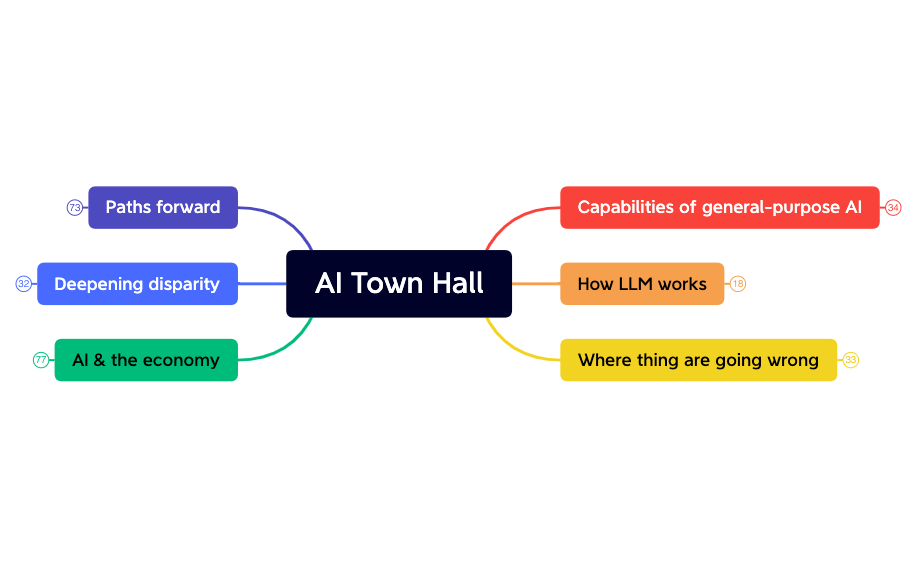
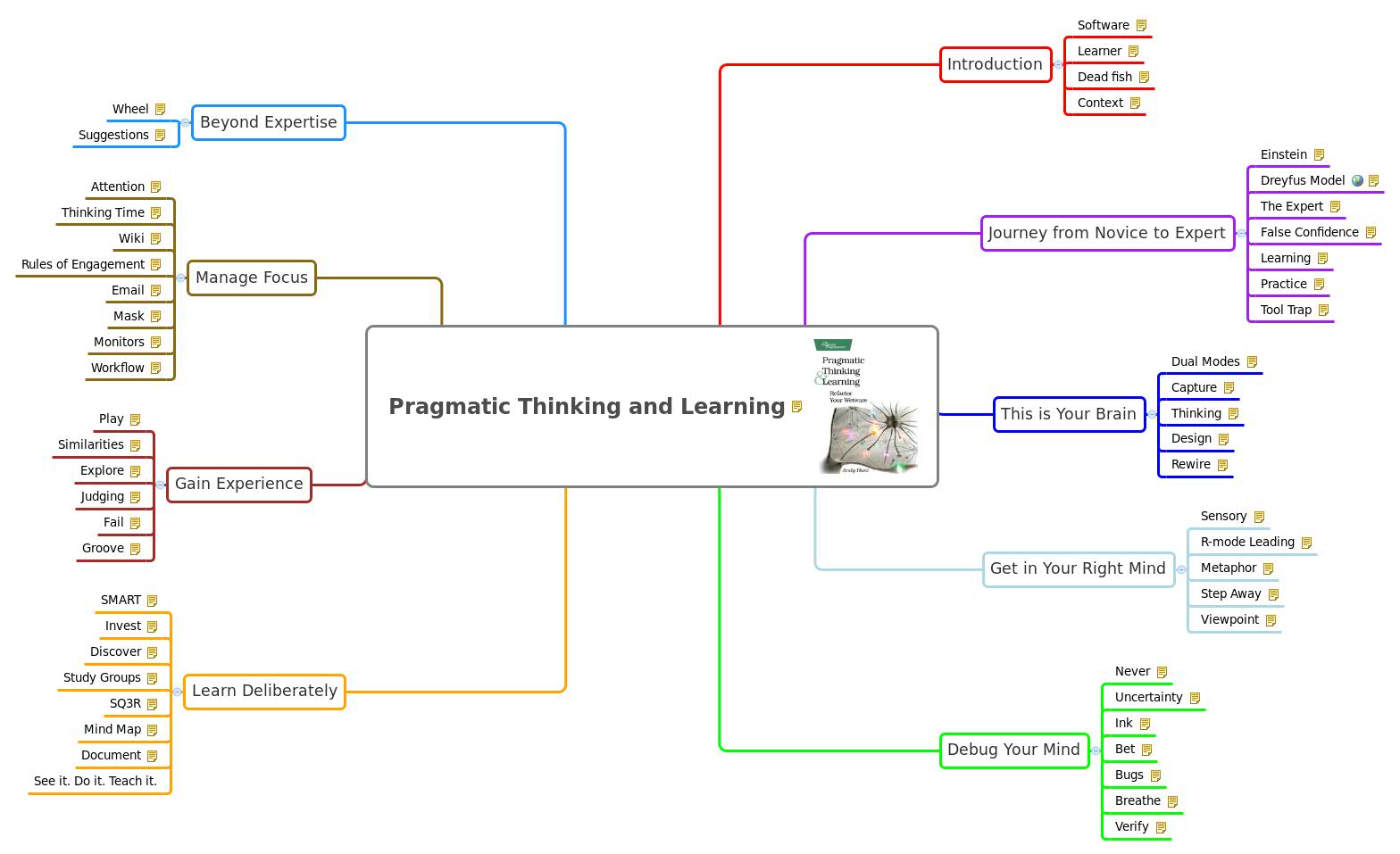
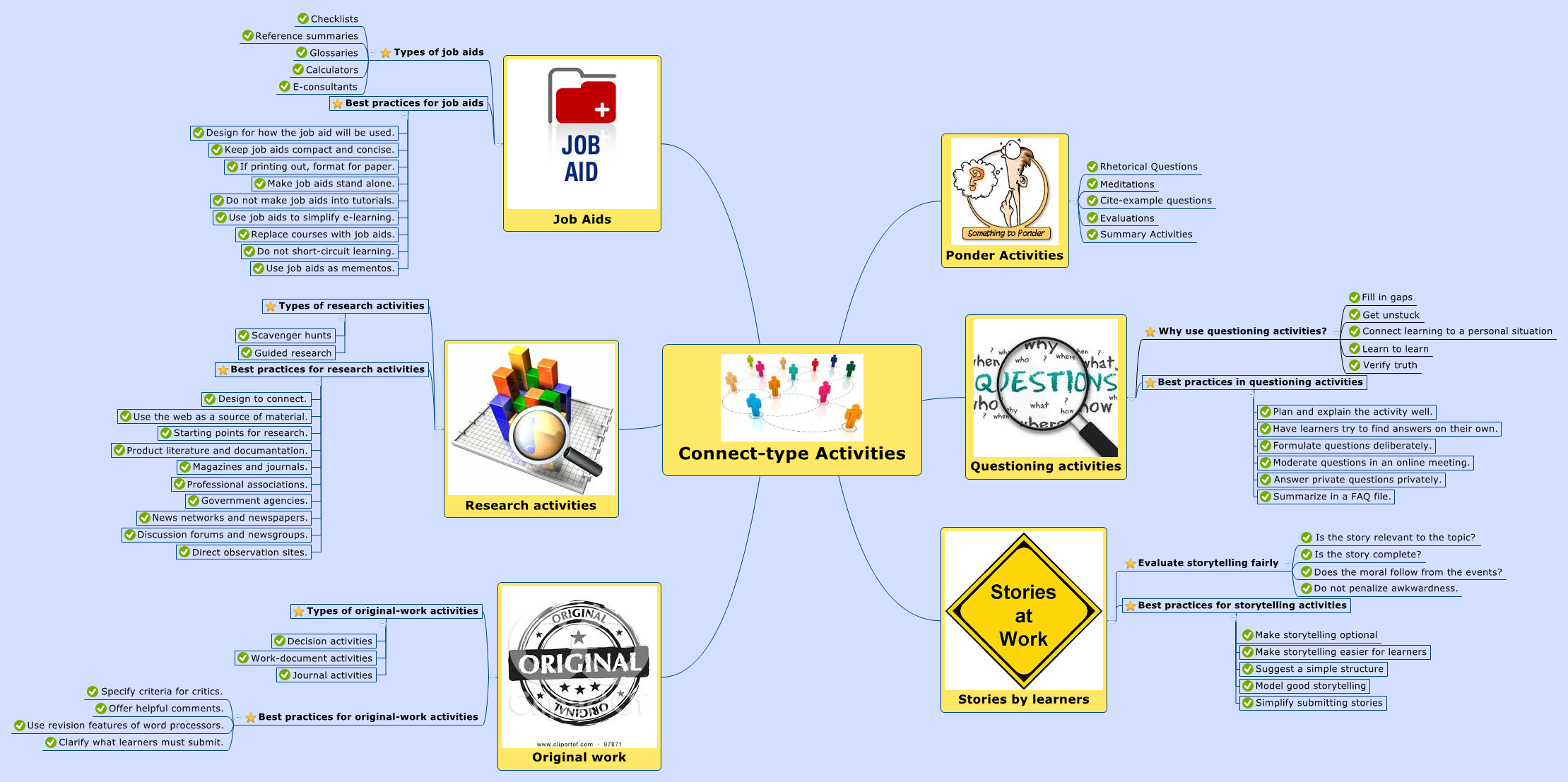
Craft, organize, and reuse high-quality AI prompts with Xmind.
AI practitioners and developers use an AI prompts template to standardize the logic behind large language model interactions. This library provides structured frameworks for role-based instructions, chain-of-thought reasoning, and complex creative writing tasks. By mapping out prompt components visually, power users can better manage variable injection and conditional logic within their automated workflows. The collection includes specialized structures for debugging code, generating marketing copy, and refining technical documentation through iterative feedback loops. These templates serve as a central repository for prompt engineering assets, allowing users to document the evolution of their instructions and the resulting outputs. Whether you are building a custom GPT or optimizing enterprise RAG pipelines, these visual guides help maintain consistency across different LLM platforms and API integrations. The available files cover diverse scenarios from simple task automation to multi-step agentic reasoning sequences.
Visualizing complex prompt logic helps developers identify potential hallucinations or logical gaps before deploying code to production environments.
The hierarchical structure of Xmind allows AI practitioners to map out nested variables and conditional branching for sophisticated agentic workflows.
Xmind AI Copilot assists in expanding prompt ideas by generating related keywords and alternative phrasing directly within your mind map.
The infinite canvas provides a spatial overview of entire prompt libraries, making it easier to manage hundreds of distinct instruction sets.
Exporting your prompt maps to Markdown or text formats ensures direct compatibility with development environments and prompt management software.
Select a framework Choose an AI prompts template that matches your specific goal, such as few-shot learning or persona-based instruction sets.
Define system instructions Input the core constraints and behavioral parameters into the central nodes to establish the foundation of your AI interaction.
Map variable inputs Create sub-branches to visualize dynamic placeholders and data sources that will be injected into your final prompt string.
Refine logical flow Use relationship lines to connect chain-of-thought steps, ensuring the model follows a specific sequence of reasoning during execution.
Export for deployment Convert your finalized visual prompt structure into a text-based format for direct use in LLM interfaces or API calls.
Many community templates are free for anyone to open and use immediately. Premium templates require a one-time purchase per file rather than a recurring subscription. After acquiring a template, you own it permanently and can open or edit it offline in the Xmind app.
Turn your best mind maps into templates the whole community can use.